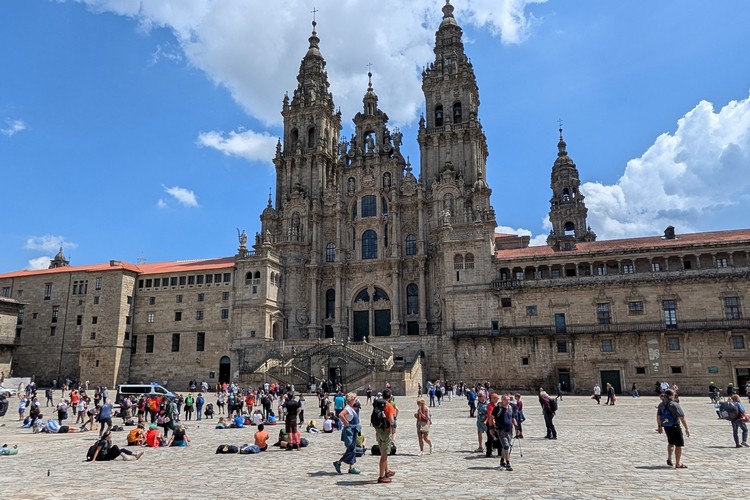
Santiago de Compostela, Spain
It does not take long to find the rhythm of the Camino. The days (and weeks) before you arrive at Santiago de Compostela can feel long and exhausting, yet time goes by surprisingly fast.
You don’t really have to think about what to do each day when you’re on the Camino. Just follow the yellow arrows, one step at time.
However, after you finally arrive at the iconic Cathedral of Santiago de Compostela, you’re left wondering – what do I do now?
In this blog post, we share a few thoughts about what to do in Santiago de Compostela after walking the Camino.
This is a long post with lots of photos of the Old Town. Keep scrolling for ideas about things to do in Santiago de Compostela!
Find more Camino de Santigao content on our Instagram and Facebook pages.
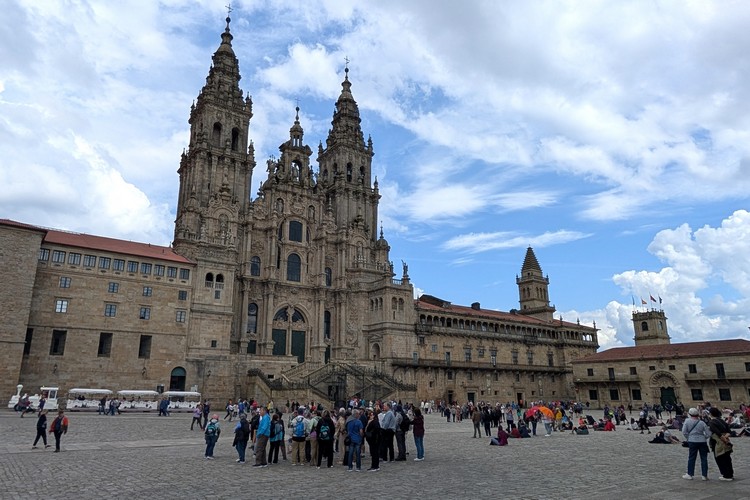
Plaza del Obradoiro
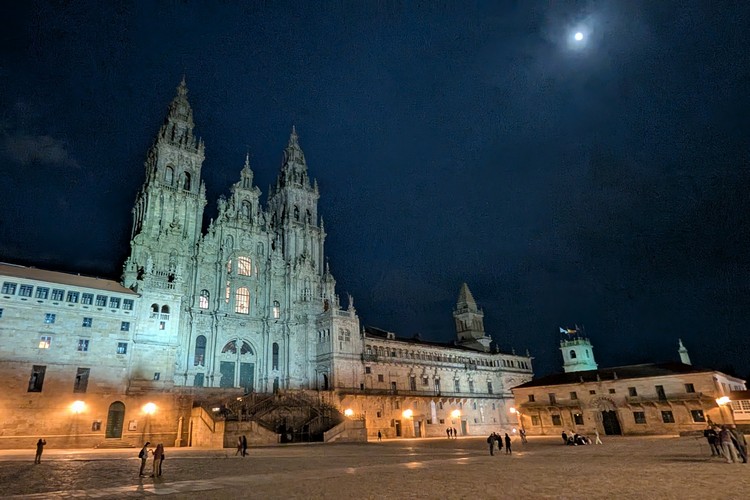
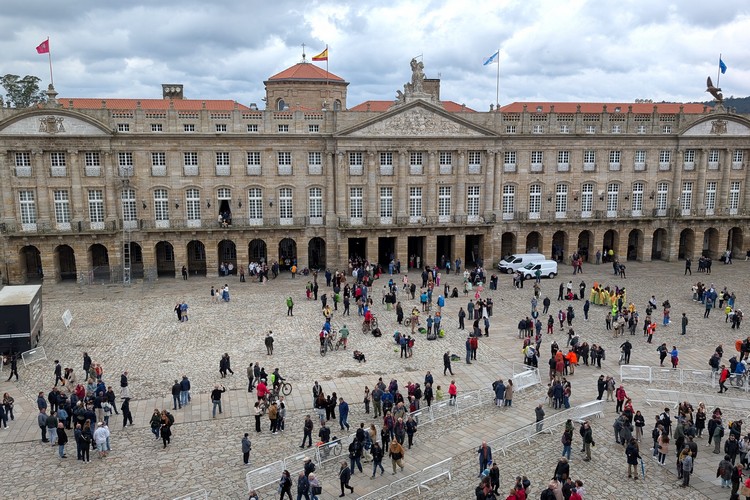
The first thing you will do when you arrive in Santiago de Compostela is take a seat in Plaza del Obradoiro (pictured above). It’s a powerful moment when you first step into this historic square and witness the towering cathedral for the first time.
Most pilgrims will simply drop their backpacks and sit on the stone floor in the centre of the square.
Walking the Camino is a huge achievement, so it might take time to process what just happened. Don’t rush the experience. Take a moment to reflect on your journey.
This is also the perfect people-watching location. You will witness dozens, if not hundreds, of pilgrims arrive at the square. Each person has their own reason for walking the Camino and it’s often an emotional experience when they arrive in Santiago.
Related: Thoughts after walking the Camino de Santiago
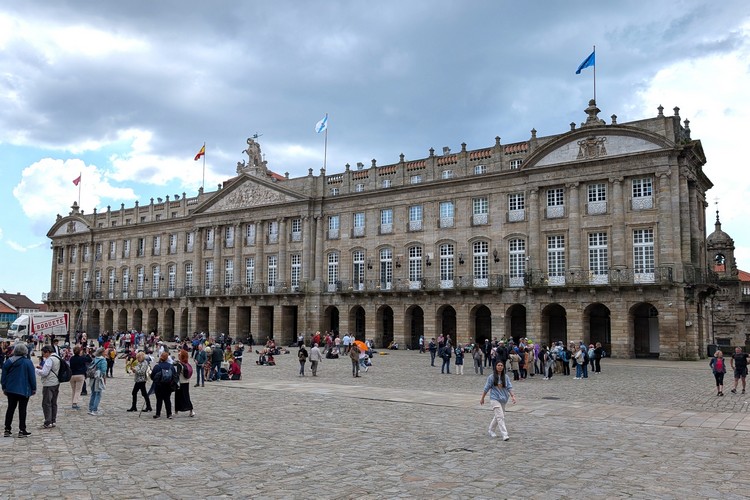
Above: Pazo de Raxoi, located in Plaza del Obradoiro, faces the twin spires of the Cathedral.
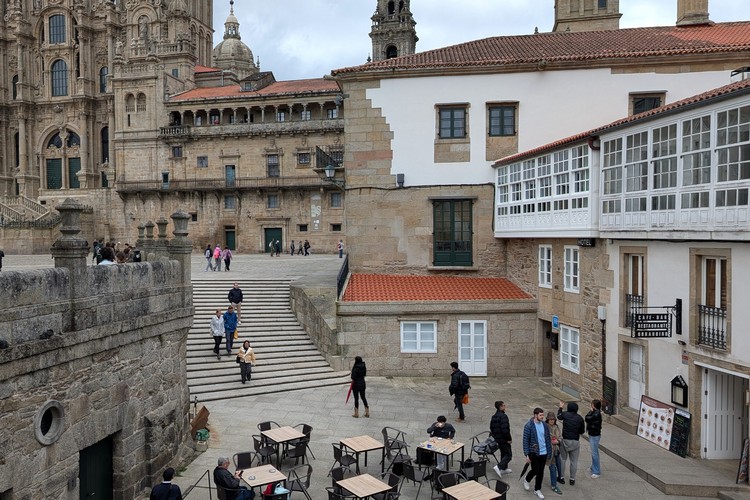
Get your Compostela
After taking your obligatory selfies in front of the cathedral, it’s time to get your Compostela. This is the official certificate of completion for the Camino de Santiago.
You get your Compostela certificate at the Pilgrim’s Reception Office (Oficina del Peregrino), located at Rúa das Carretas, 33.
It’s a short walk from the Cathedral to the office. When facing the Cathedral, go left and down the stairs; then turn right. If you don’t have access to Google maps, just ask fellow pilgrims to point you in the right direction.
It’s recommended to register your details online before arriving at the office (here’s the link). You will receive a QR code. Present this upon arrival and join the queue.
You must present your stamped credentials from your Camino at the office (in person).
The office is open daily, generally from 10:30 AM to 6:30 PM.
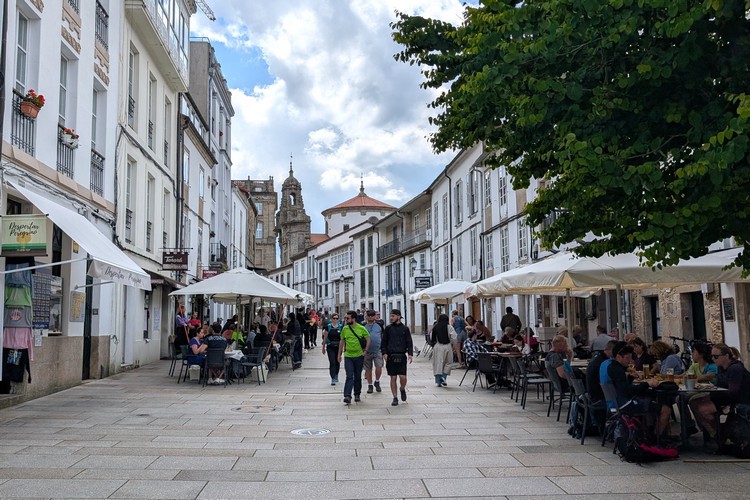
The Pilgrims office is on this pedestrian road (above photo).
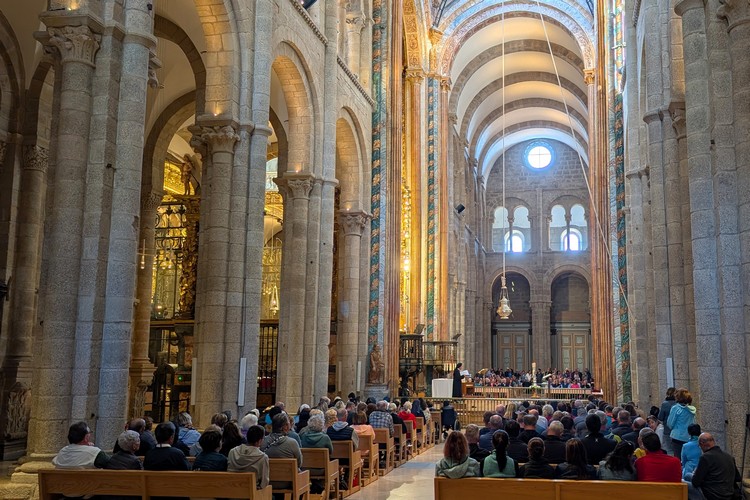
The Pilgrim’s Mass
One of the first things you’ll want to do after completing the Camino is attend the Pilgrim’s Mass.
This daily mass is held inside the Cathedral of Santiago de Compostela. Even if you’re not religious, this mass is an powerful conclusion to the Camino experience. The mass celebrates and welcomes those who have just completed the Camino.
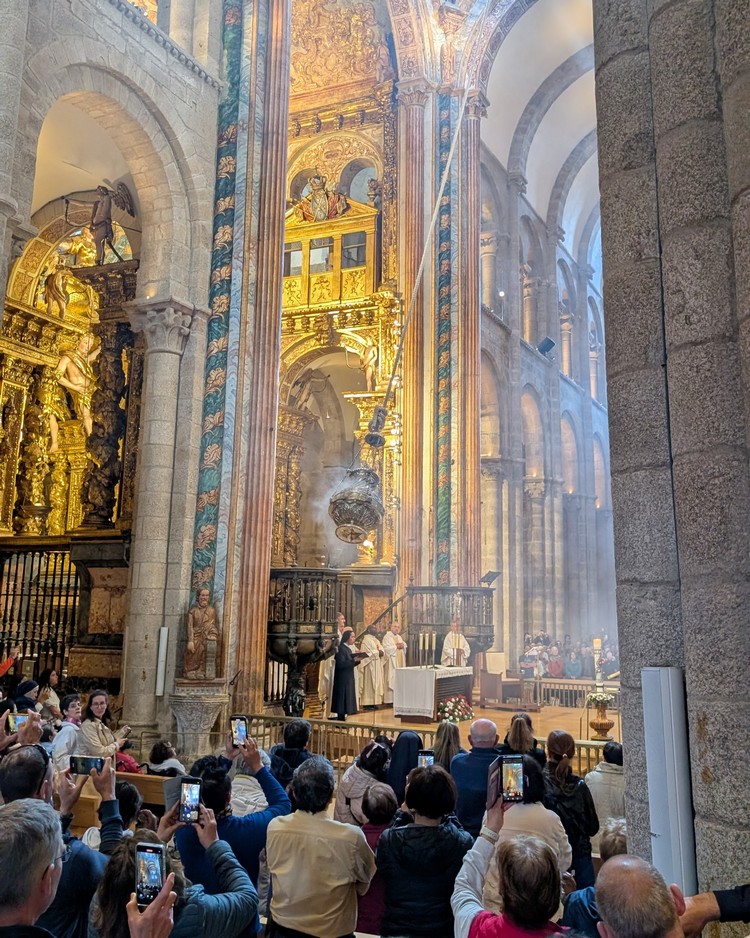
A highlight of this particular mass is the swinging of the Botafumeiro, a famous silver-plated brass censer (thurible). You can see it hanging in front of the alter in the photo above.
At the time of my visit (May 2025), there are four daily times for the Pilgrim’s Mass: 7:30 AM, 9:30 AM, 12:00 PM (noon) and 7:00 PM.
I’ve read that the Botafumeiro is only used at the 12:00 PM mass, although I cannot confirm this. I attended the 12:00 PM mass, which is why I have photos and video of the swinging Botafumeiro (below).
Note – backpacks are not allowed inside the Cathedral during mass. It’s best to leave your backpack at your accommodations, if possible. If not, there are retail stores near the cathedral that will hold your bag.
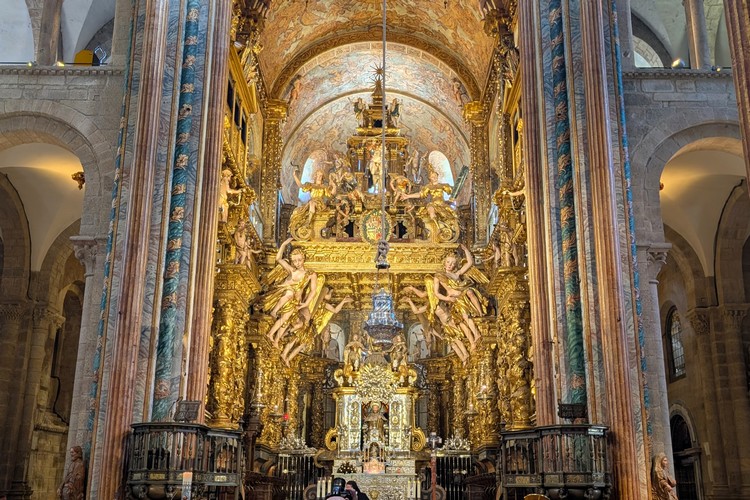
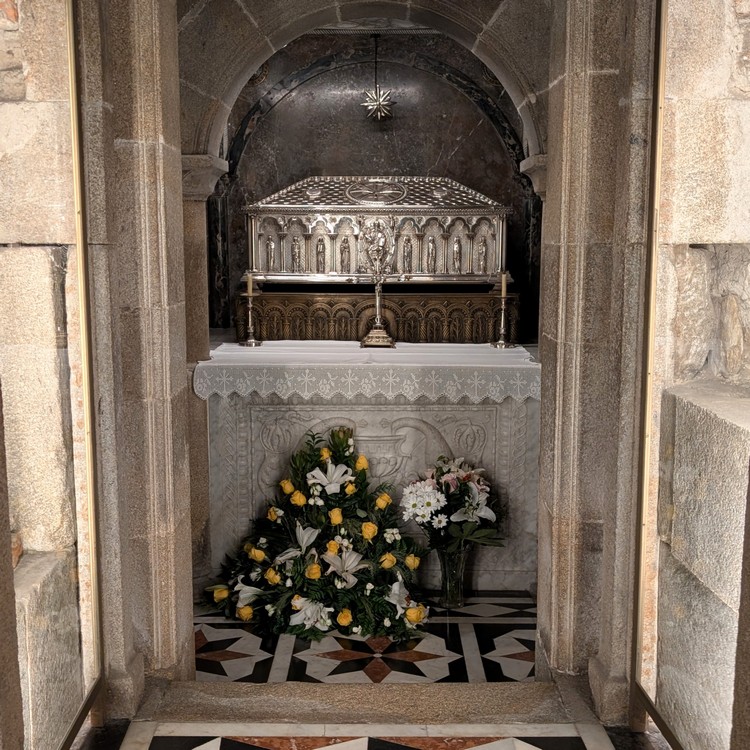
The tomb of St. James (Santiago)
The tomb of St. James is located in a subterranean crypt beneath the main altar of the Santiago de Compostela Cathedral. The ornate alter is pictured above.
After attending Pilgrim’s Mass, visitors can walk under the alter to view the tomb (photo below).
To view the tomb, you line up to the left of the alter. The line will be long after the mass, but it moves quickly. You walk down a few stairs before viewing the tomb.
The path continues to the back of the main alter where you will see a huge statue of St. James. There is a tradition for pilgrims to hug this statue (Hug of the Apostle) as a sign of completing their Camino journey.
Entrance to the Cathedral
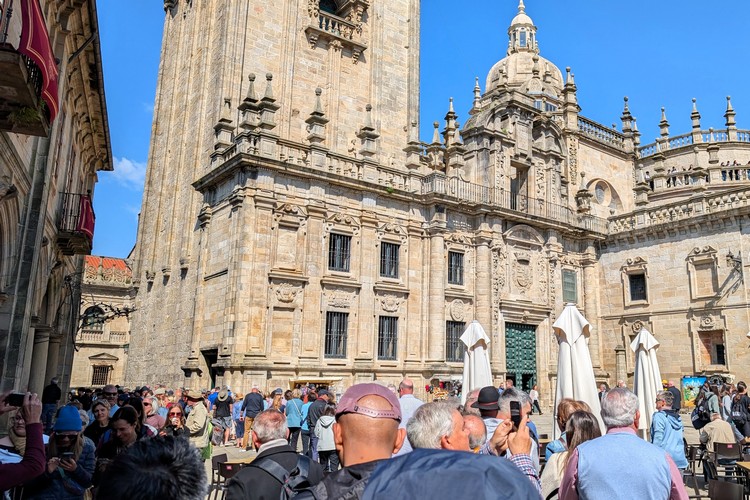
The above photo shows the lineup outside the Cathedral for the 12:00 PM Pilgrim’s Mass. It’s a long line but it moves quickly. I waited about 15 minutes.
Get there early if you want a seat. There was only standing room by the time I arrived.
The entrance to the cathedral is NOT in the main square (Plaza del Obradoiro). It’s actually on the south side of the cathedral.
The doors at the front of the cathedral (facing the square) are for the museum entrance, which is separate from the church. I made the mistake of trying to enter here.

Indulge yourself with tasty Pinchos
After weeks of walking you must be hungry, right?
Well, you’re in luck! Because Santiago has several fantastic restaurants to choose from.
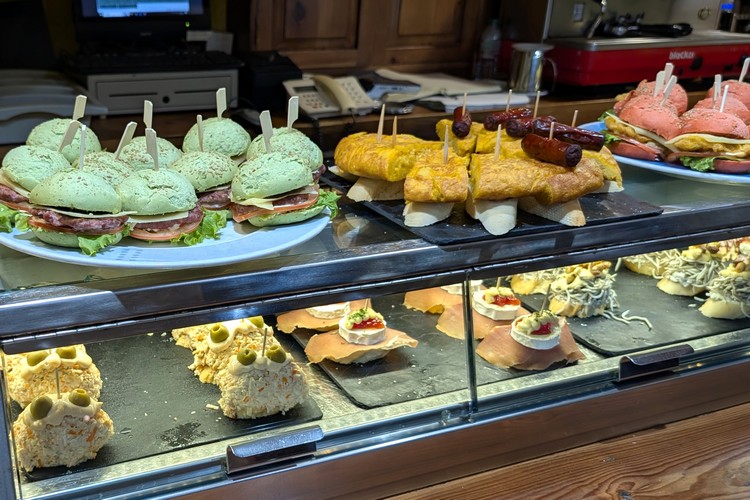
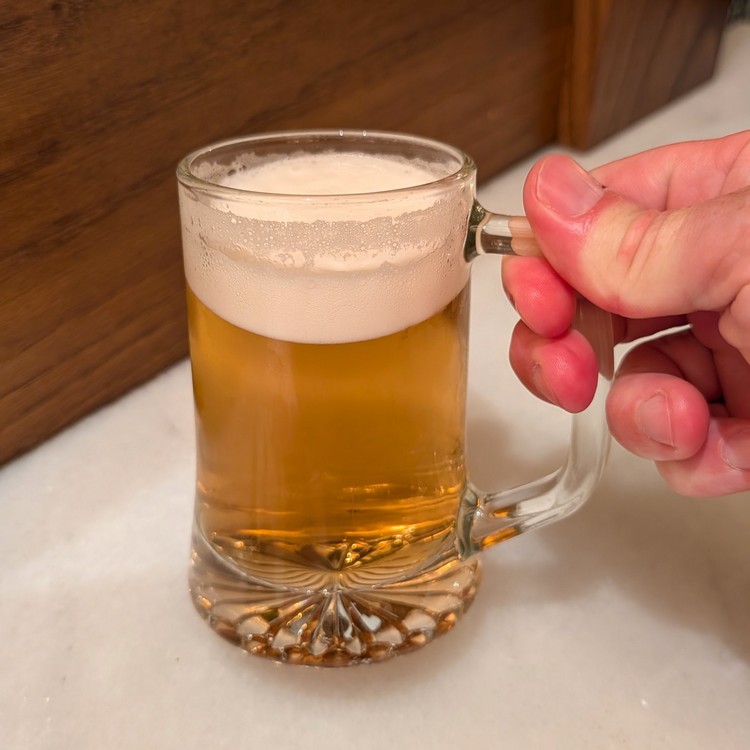
Pinchos are small, skewered snacks popular in Northern Spain (Basque Country). Most pinchos restaurants serve a variety of finger foods that you either grab from the counter or point to the items and a server will plate for you.
I visited Antollos Pinchos y Vinos and A Taberna do Bispo during my 2 days in Santiago.
Antollos, pictured above and below, has different skewers that represent different prices, ranging from €1 to €3 per piece. At the end of your meal, you are charged based on the number of skewers you have.
Watch this Reel to find out how much weight I lost on the Camino.
El Papatorio Tapas & Brasas
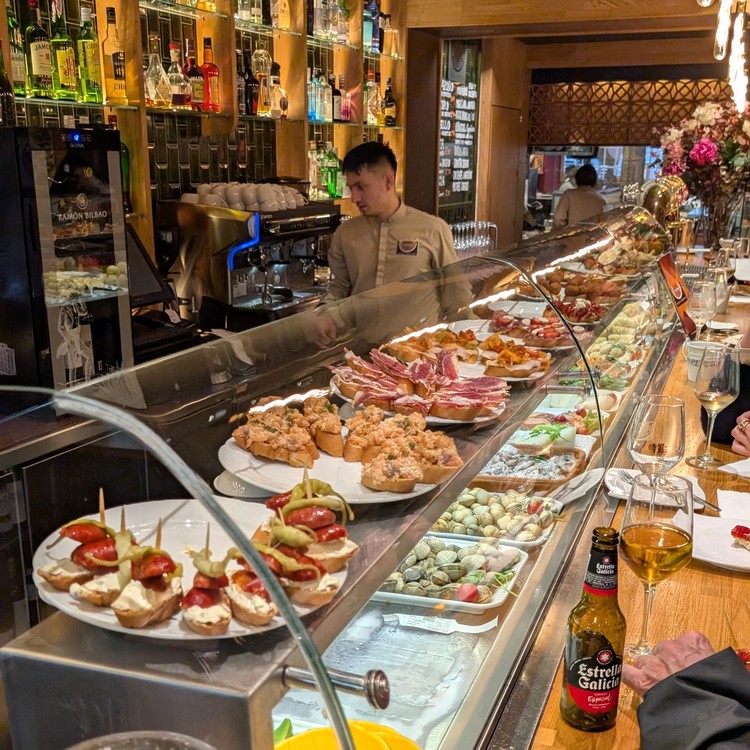
On my second night in Santiago de Compostela, I found this upscale tapas bar and restaurant.
I felt a little out of place with my Camino clothing, but the food looked too good to pass. So I wiggled my way to a tight spot at the bar and ordered some pinchos and red wine.
The food and atmosphere here is fantastic. It was exactly what I was hoping for.
In the back of the restaurant are tables where guests have a more formal sit-down meal (vs the tapas at the bar, which is more social with people standing while they drink and snack).
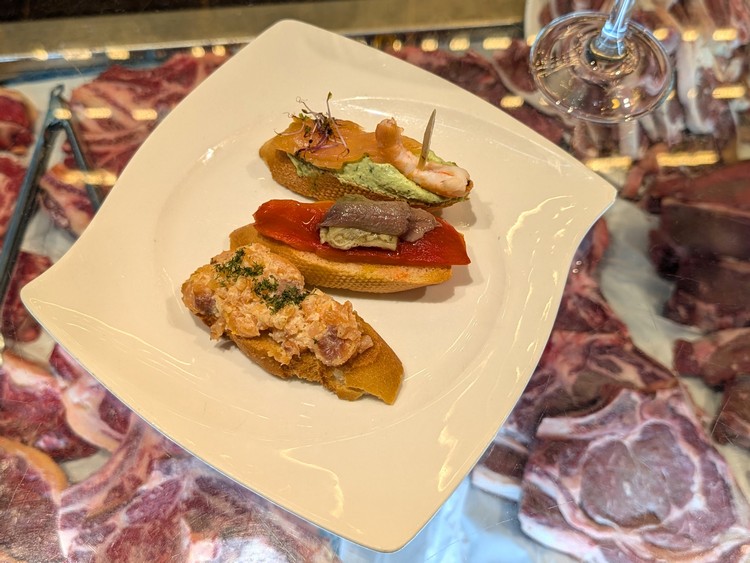
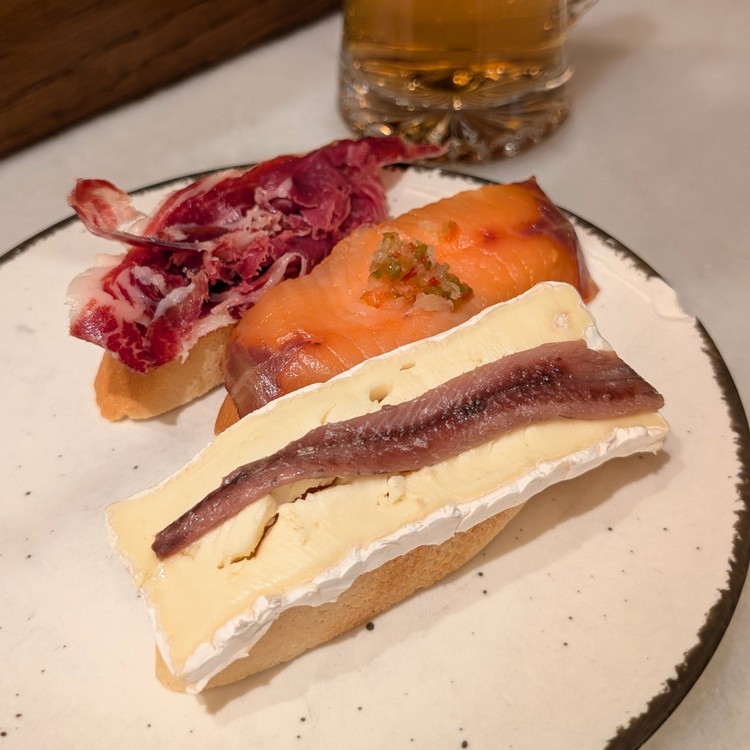
Above is my first round of pinchos El Papatorio. I may have had multiple rounds of pinchos that evening.
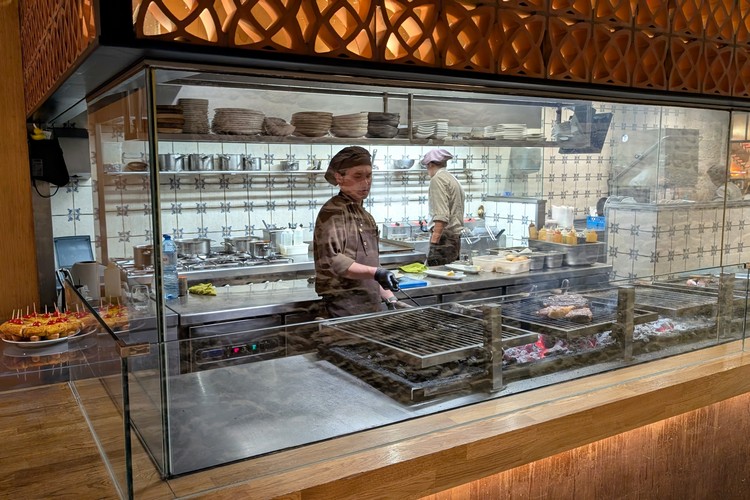
Notice the cuts of beef under the glass countertop. Guests can choose their cut of meat and/or seafood and it’s grilled in the open kitchen, pictured below.
Pulpo a la Gallega – a Galician specialty
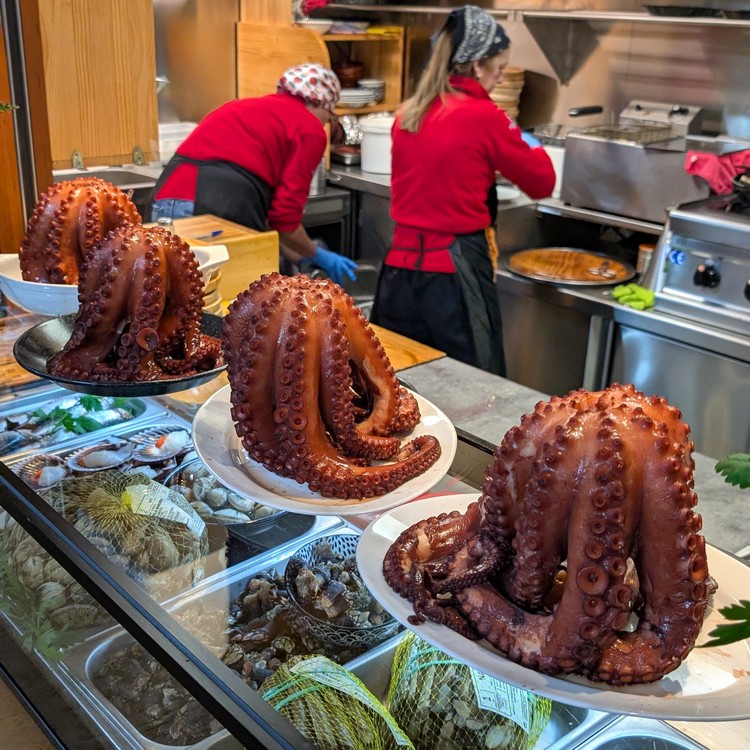
If you did not have a chance to try Pulpo a la Gallega (Galician-style octopus) while on the Camino, now is your chance! Santiago de Compostela has several restaurants that serve this famous dish.
I don’t remember the name of the restaurant pictured here, but it’s located on Rua do Franco. Look for the giant octopus on the counter-top (photo above).
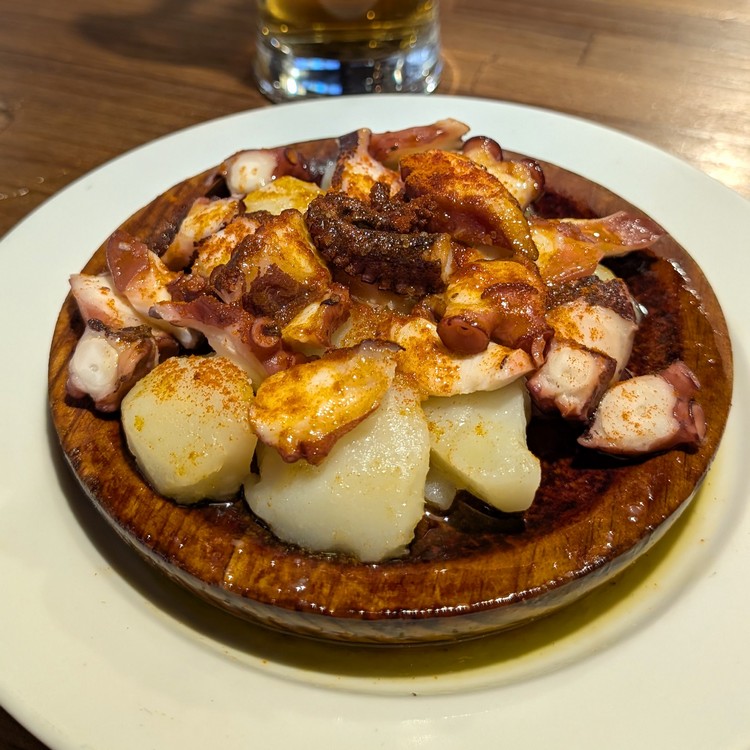
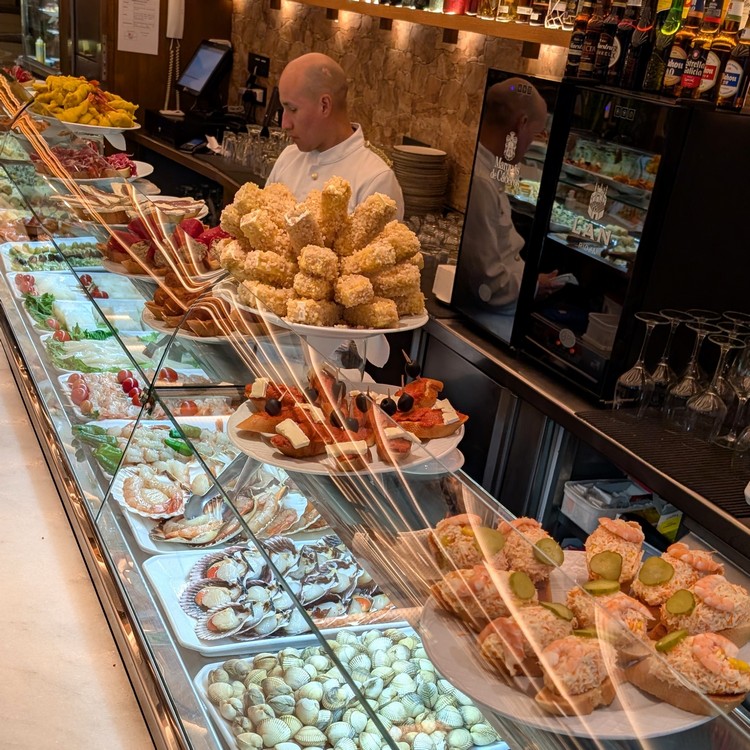
After weeks of eating pilgrim’s meals on the Camino, it’s time to treat yourself.
Santiago has so many wonderful restaurants to choose from. Indulge yourself, you’ve earned it!
Live music by Tuna de Derecho de Santiago
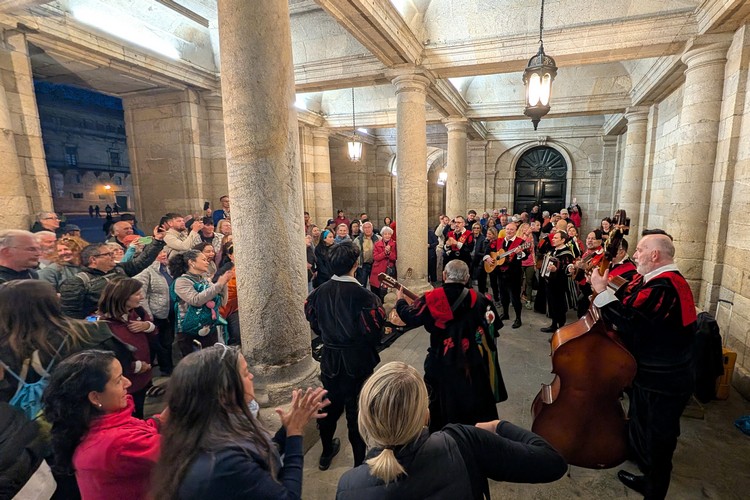
The Tuna de Derecho de Santiago de Compostela is a centuries-old university musical group that are famous for their nightly performances in the historic Plaza del Obradoiro.
I was unaware of this nightly performance and actually stumbled upon it after an evening of tapas and wine. I heard music and clapping in the distance, so I followed my ears. And I’m glad I did because it was a joyous experience after completing the Camino.
You can usually find them around 10:00 PM under the arches of the City Hall in Plaza del Obradoiro. In the photo below you will see a cluster of people – that’s where you will find them.
Watch the live performance from Santiago on our Facebook page.
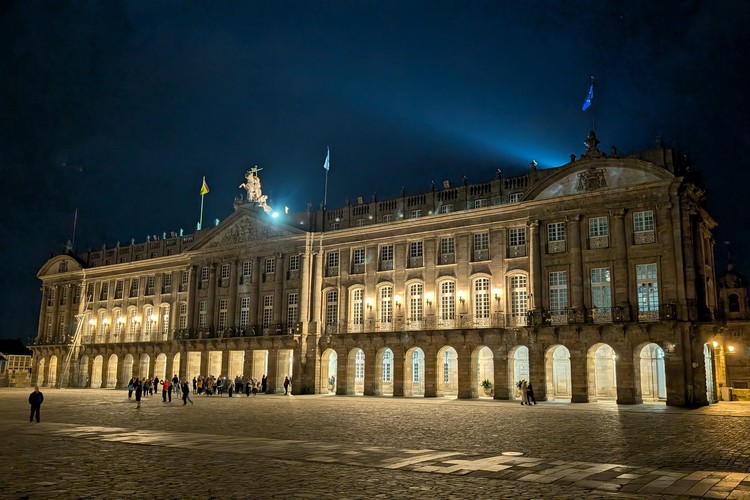
Explore the city at night
Santiago de Compostela takes on a different persona at night. The bars and restaurants come alive with music, laughter and clinking glasses. Many of the people celebrating in the Old Town are tourists and visitors.
However, when you step away from the entertainment areas and wander the quiet, dark streets at night, you can feel its medieval history.
The Old Town has a haunting atmosphere, especially when shadows are cast from the moonlight. It’s a little spooky when walking solo down the narrow streets.
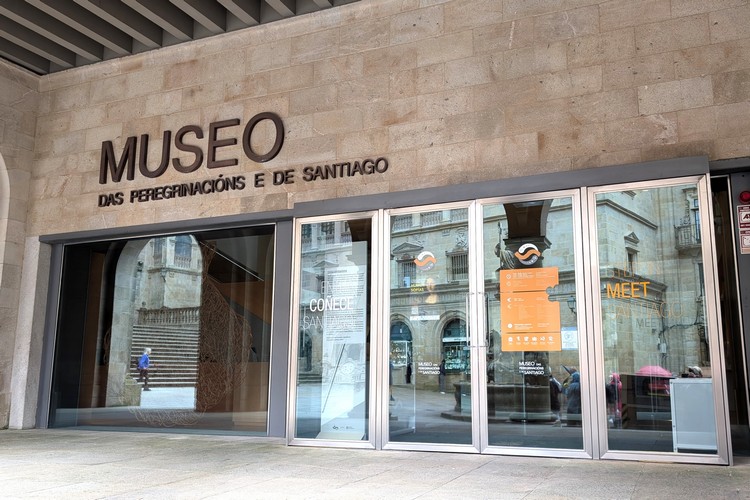
Museum of Pilgrimage and Santiago
Located beside the Cathedral, the Museo das Peregrinacions e de Santiago (Museum of Pilgrimage and Santiago) is worth a visit. You only need 30-60 minutes here.
It’s a state-owned cultural institution that is dedicated to the history of the Camino de Santiago. The museum is spread across several floors, each focusing on a different aspect of the pilgrimage.
It’s FREE to enter, so this tourist attraction is as budget friendly as it gets.
Hours of Operation vary depending on the time of year. Generally, it’s open from 9:30 AM to 8:30 PM. It’s closed on Mondays and holidays.
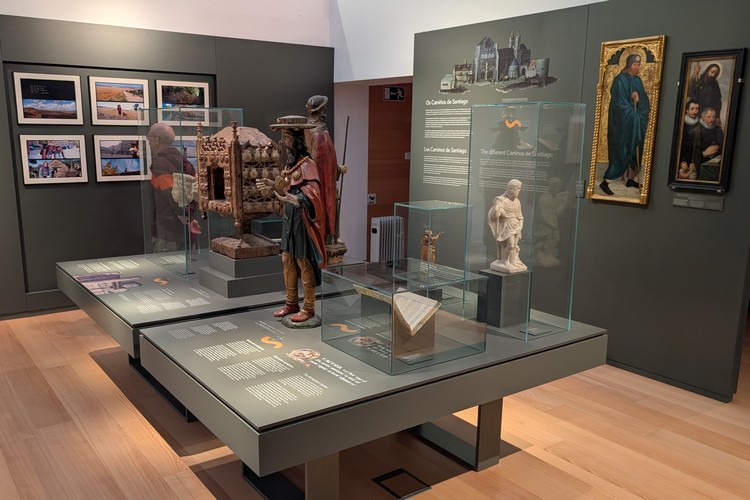
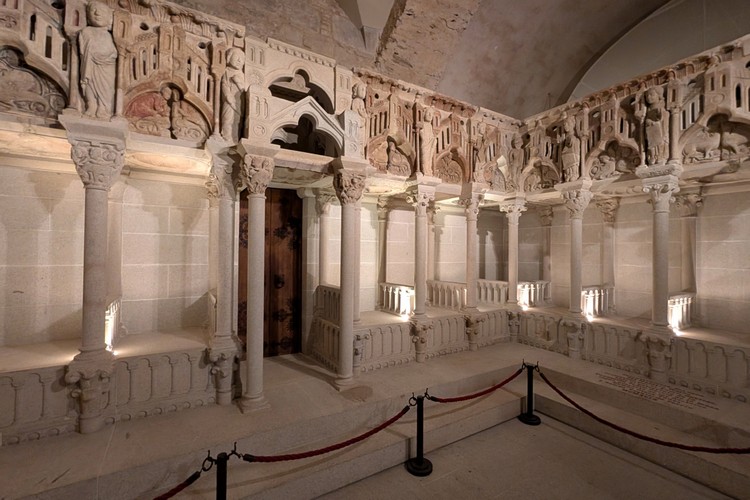
Santiago Cathedral Museum
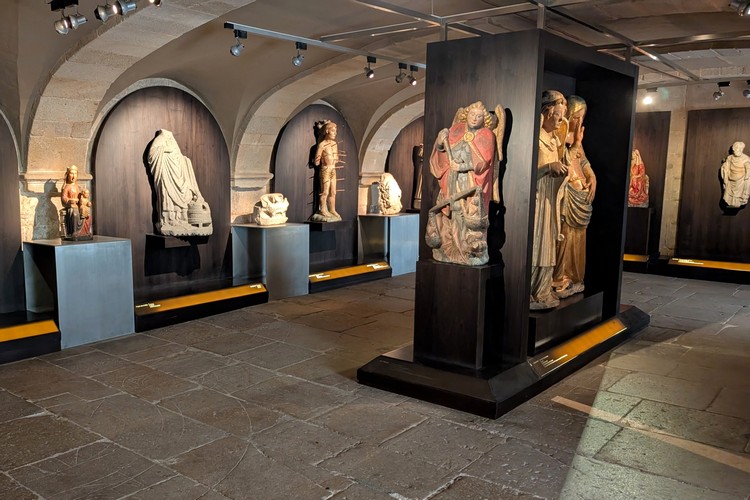
The Santiago Cathedral Museum (Museo da Catedral) exceeded my expectations.
Initially, I was going to skip this museum. I thought that by visiting the Cathedral and the Pilgrimage Museum mentioned above, there wasn’t a need to also visit this museum. I was wrong. This museum is great and certainly worth a visit.
The museum is spread over several floors and has a variety of exhibits. See photos below.
The main entrance is located in Praza do Obradoiro, to the right side of the cathedral’s main façade.
General admission is €9 to €23 – depending on whether you visit the Pórtico de la Gloria or rooftops.
There is a discount for Pilgrims. Bring your Camino passport or Compostela as proof.
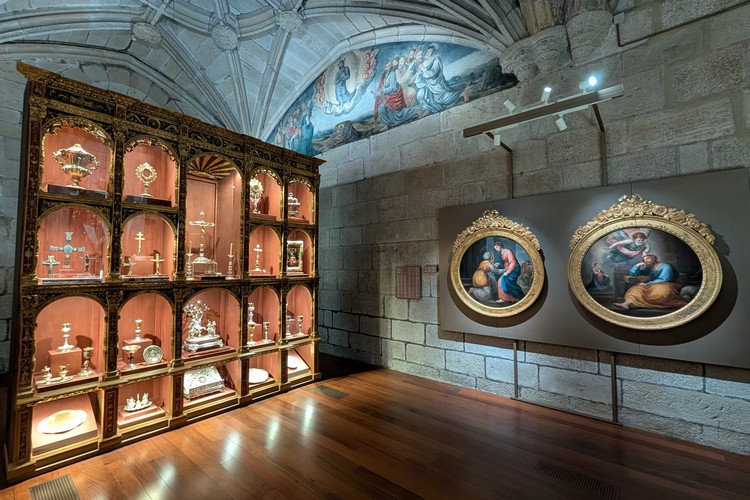
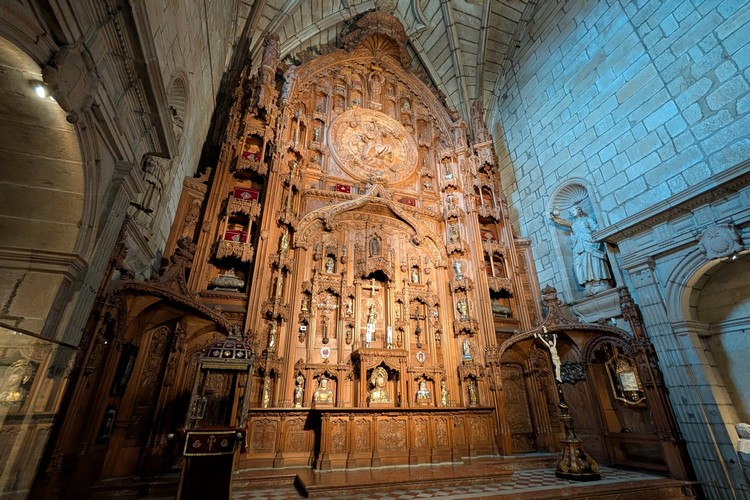
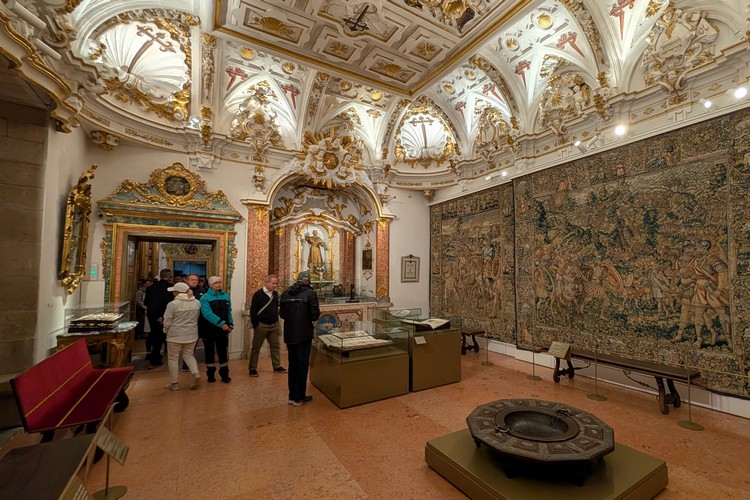
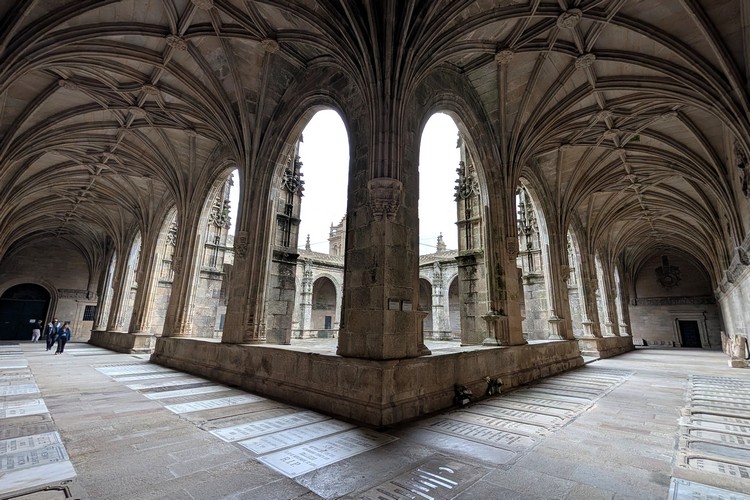
The cloister of the Cathedral of Santiago de Compostela (above) is one of the largest and most significant Renaissance cloisters in Spain.
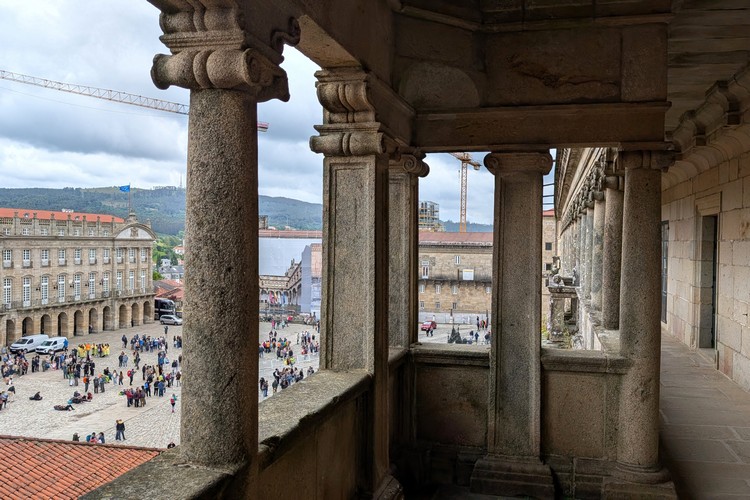
Outdoor views from Santiago Cathedral Museum
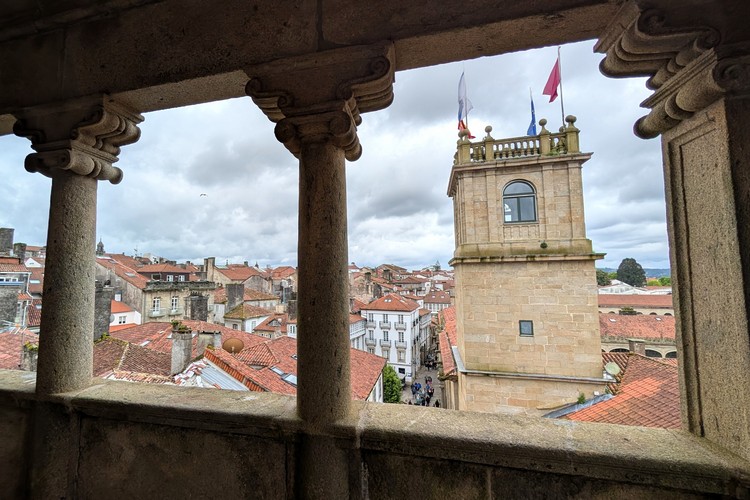
Guests of the museum can step outside for incredible views of the plaza and red-roofed city.
Visitors can join the Cathedral of Santiago de Compostela Rooftop Tour, also known as ‘Cathedral’s Decks and Carraca’s Tower’ tour.
There’s a fee for this tour. More info here.
It’s recommended to book tickets online in advance because it sells out. I was unable to take this tour because it was sold out during my time in Santiago de Compostela.
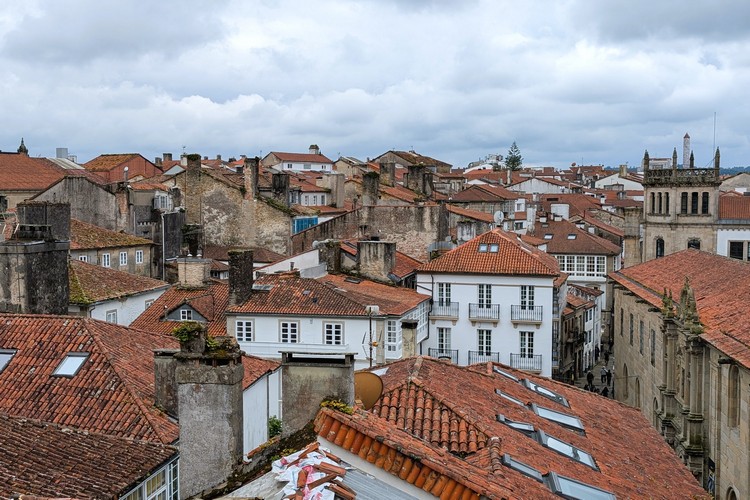
Museo Diocesano – San Martiño Pinario
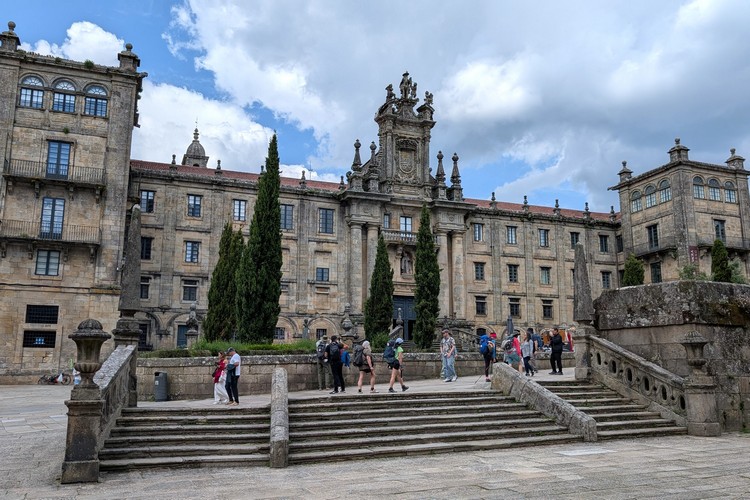
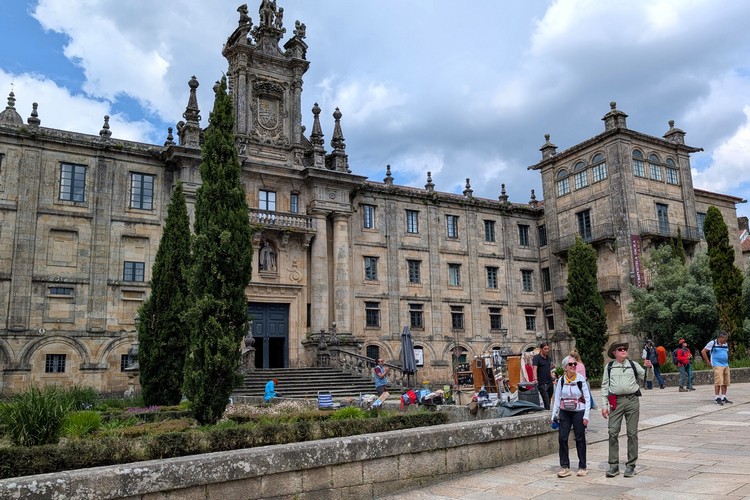
The Museo Diocesano of San Martiño Pinario is a religious art museum and church located across the street from the main Cathedral. You will pass this monastery (on your right) as you walk the Camino Frances route to the main plaza.
The museum is located inside the Monastery of San Martiño Pinario, which is said to be the second-largest monastic complex in Spain.
General admission is €5 per person. Discount is given to pilgrims. More info here.
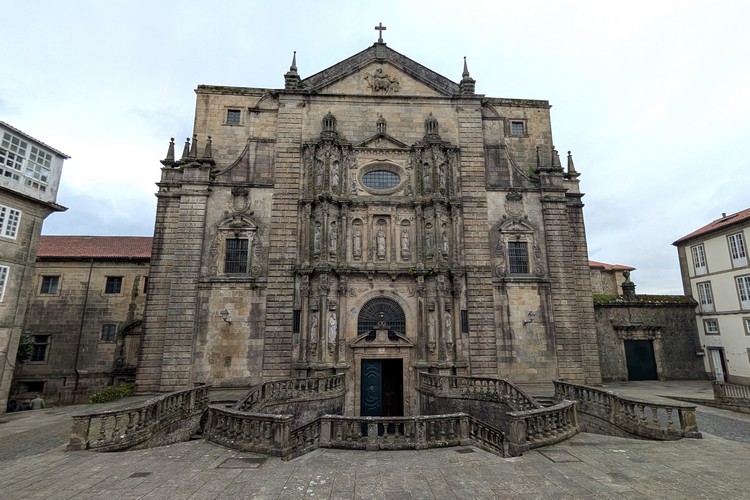
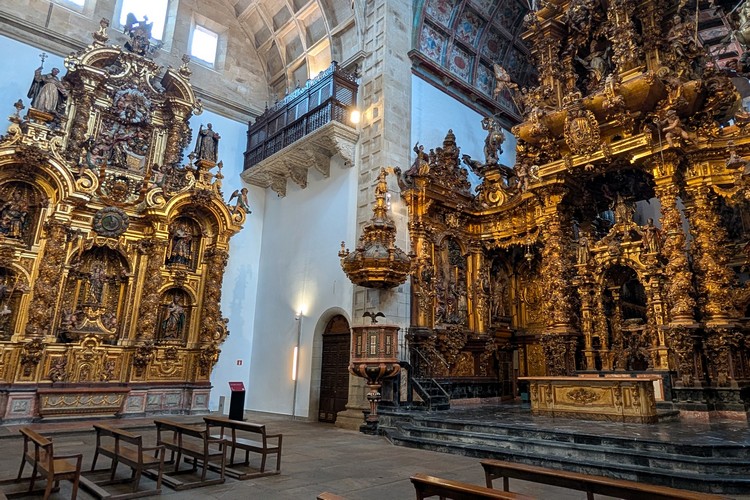
Igrexa de San Martiño Pinario
When you purchase your ticket to the Santiago Cathedral Museum, you also get free entry to Igrexa de San Martiño Pinario (located inside Monasterio de San Martín Pinario).
The entrance to the church (pictured above) is at the back of the monastery.
It doesn’t look that big from the outside. However, it’s quite impressive on the inside. See photos below.
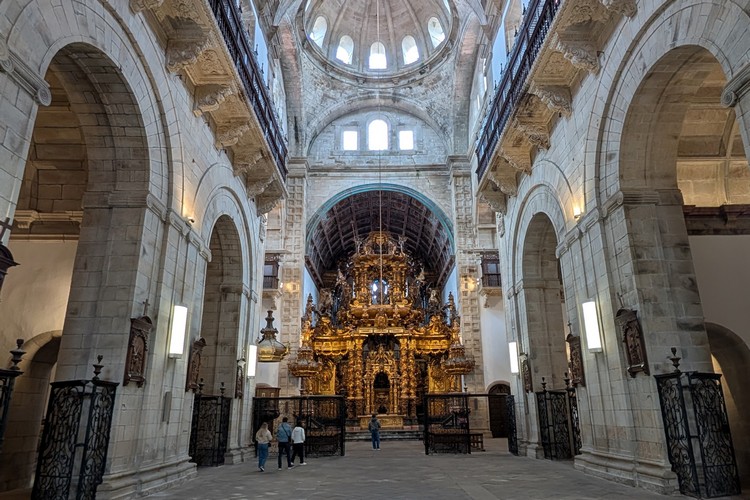
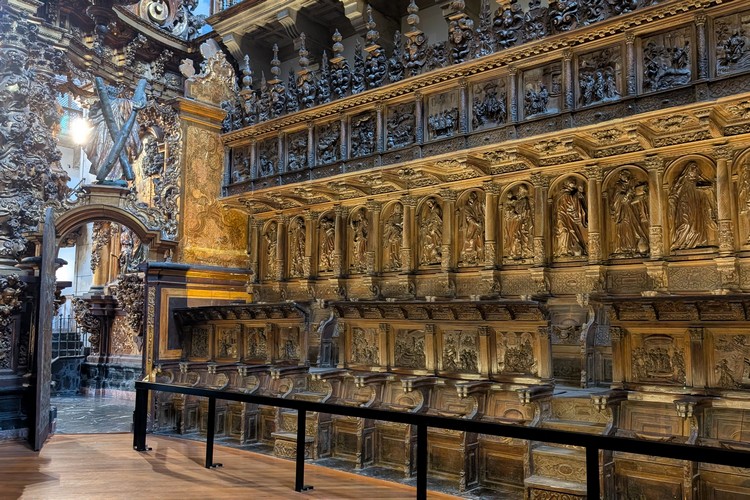
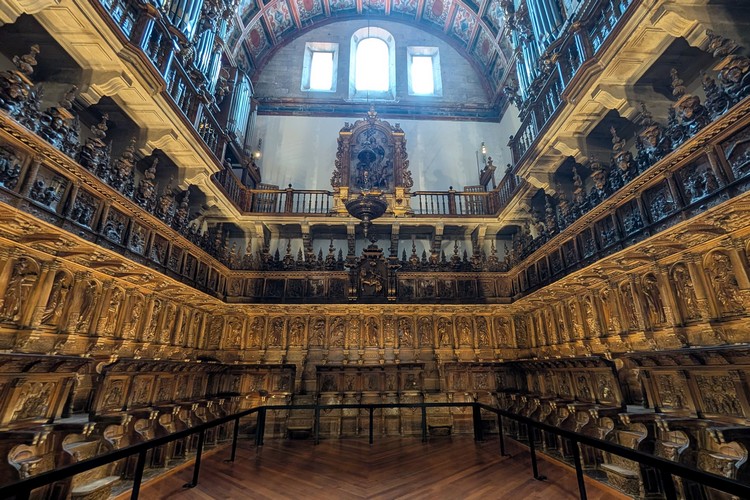
Palace of Fonseca
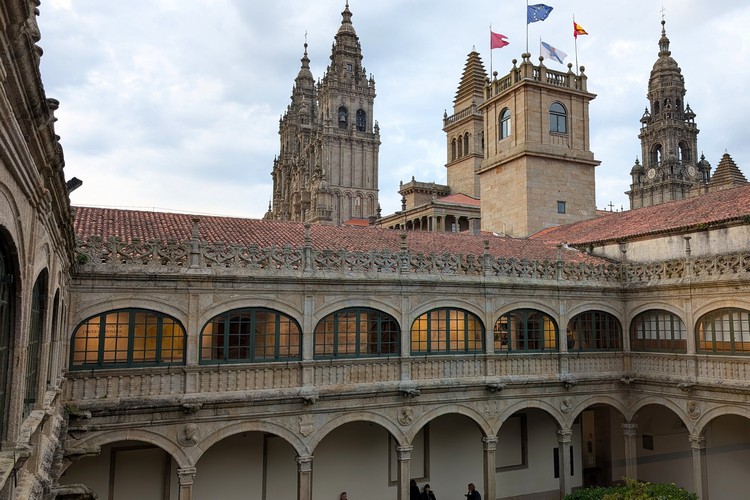
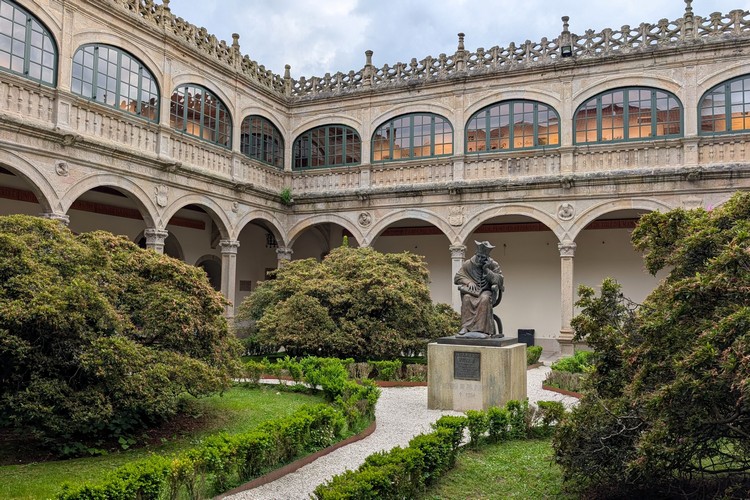
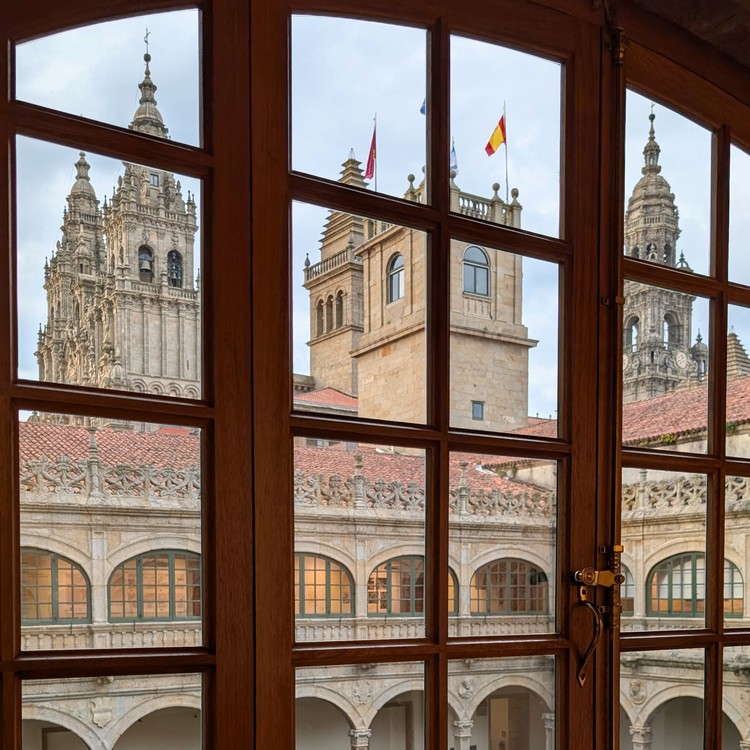
Located in the heart of the historic center, this 16th-century building is considered the original nucleus of the University of Santiago de Compostela.
The entrance is within steps of the main square, so this is a convenient attraction to visit. You can actually see the spires of the cathedral in the backdrop.
It’s FREE to enter the palace and courtyard.
Hours of Operation are Tuesday to Saturday (11:00 AM to 2:00 PM and 5:00 PM – 8:30 PM). Closed Sundays and Mondays.
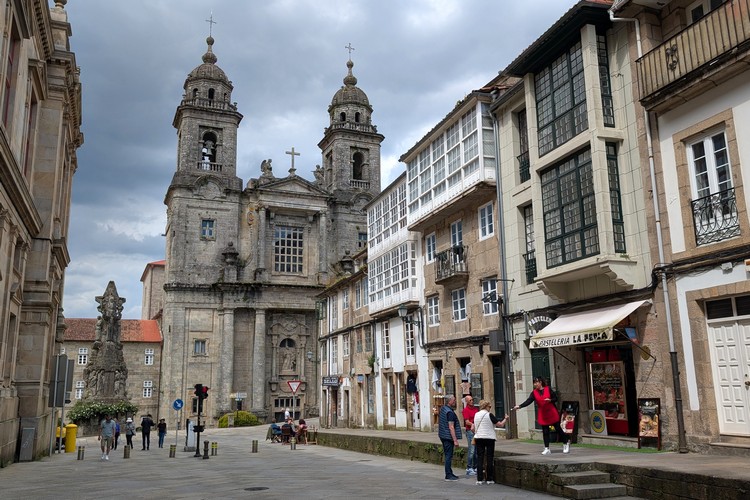
Saint Francis Church
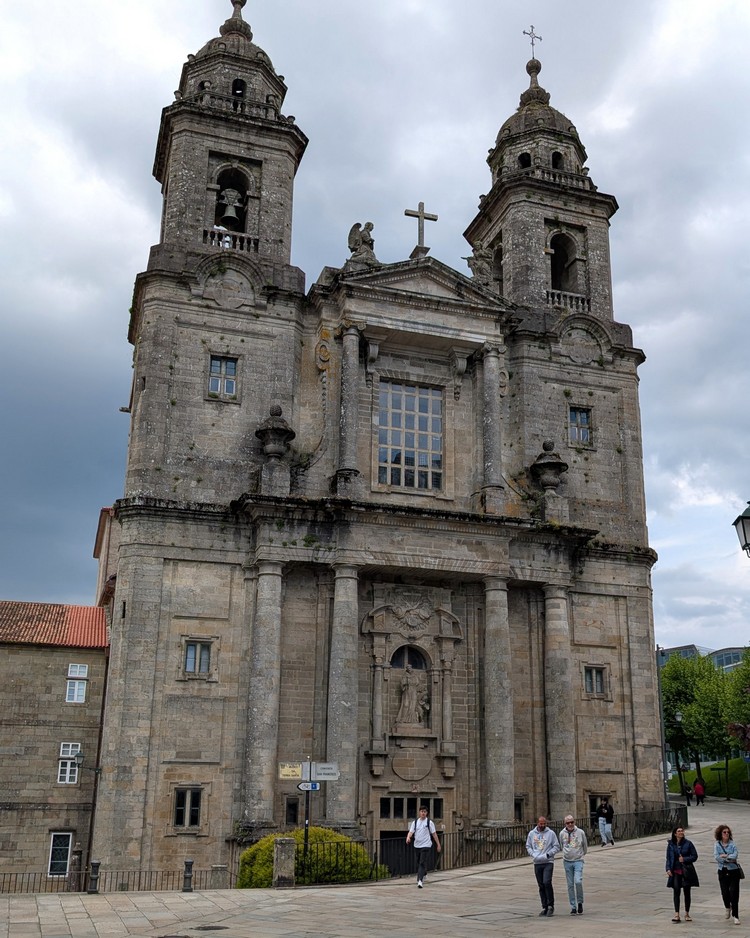
Another interesting church in the historic centre of Santiago de Compostela is the Church and Convent of San Francisco (Saint Francis Church). More info here.
It’s located north of the main cathedral and Plaza del Obradoiro, about a 10 minute walk.
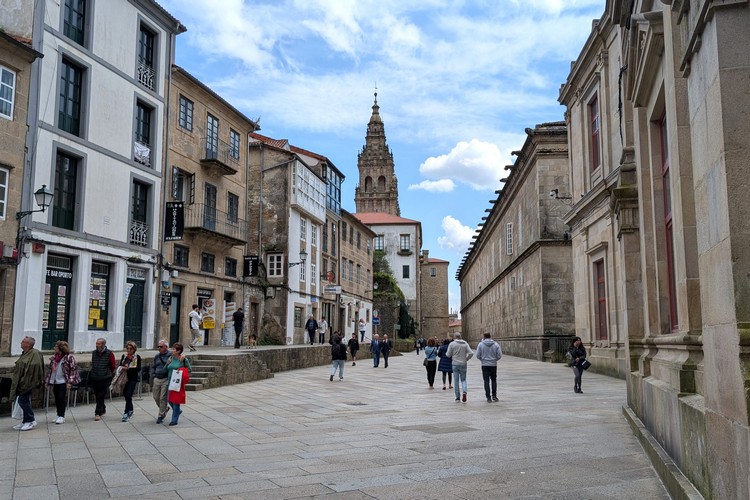
This pedestrian road (above) connects Saint Francis church to the main cathedral and plaza.
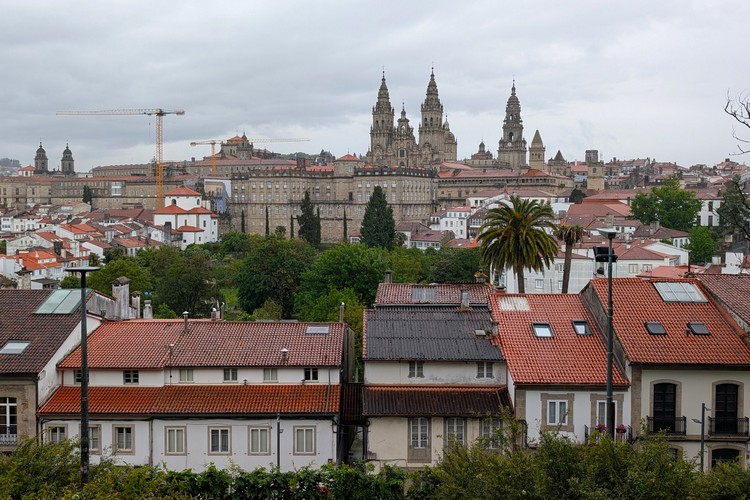
Miradoiro da Catedral – Alameda Park
Alameda Park is a large public green space located just outside the Old Town centre. It’s about a 15 minute walk from the main plaza to the park.
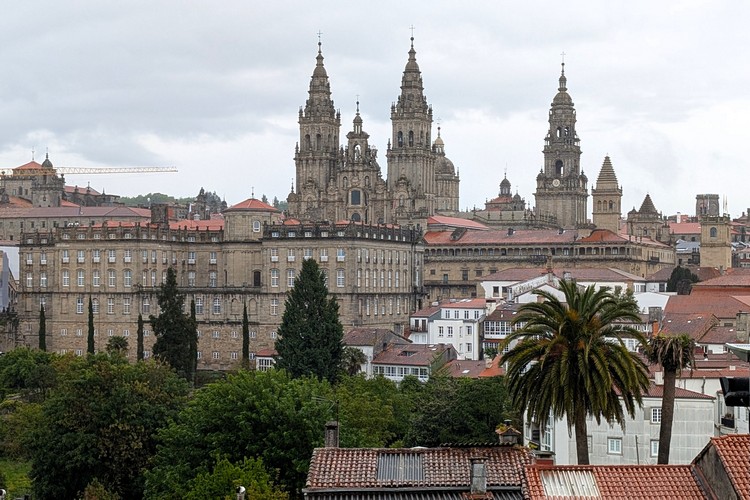
Miradoiro da Catedral is the lookout point pictured above and below. If you’re looking for a panoramic view of the cathedral and surrounding area, this is the spot.
It was raining when I visited, so I didn’t get the full nature experience. However, it looks like a very nice place to relax under the trees (assuming the weather is nice).
Mercado de Abastos (Food Market)
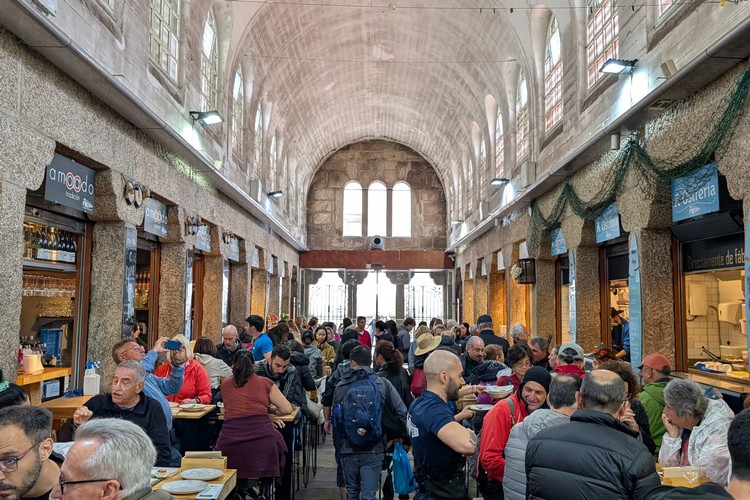
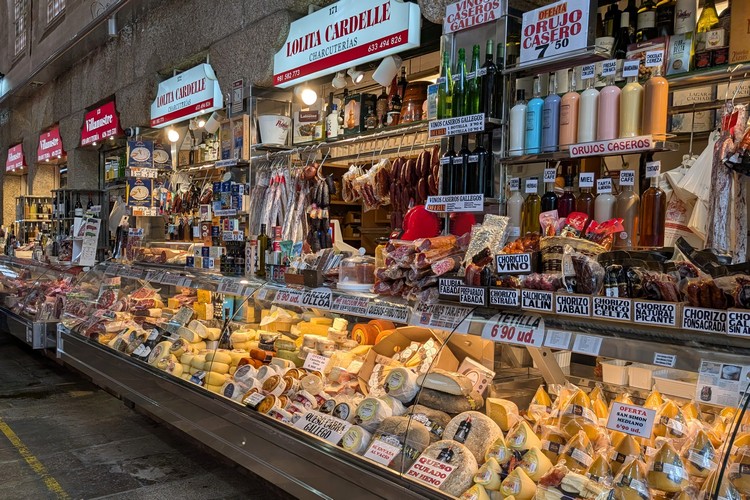
This is a popular attraction for the foodie traveler. The Santiago Market is located inside an old historical building and it has several food vendors, along with traditional fresh items like seafood, meats, cheeses, produce and flowers.
I visited mid-day and it was very busy (see above photo). I’ve read that this market is the second most visited attraction in Santiago de Compostela, after the cathedral.
My goal was to sample some food here, but I could not find a seat. It was just too busy. So I decided to wander around instead.
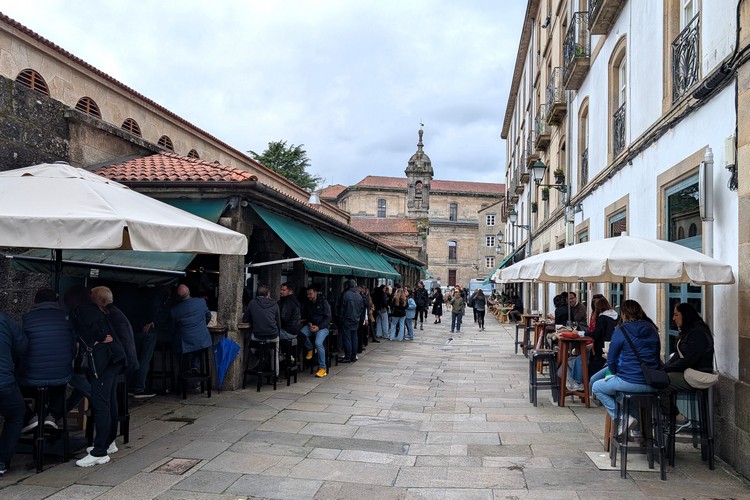
Above is the outside of the market. There are several restaurants and bars here, many with outdoor seating. It appears to be a popular lunch spot for locals, too (not just tourists).
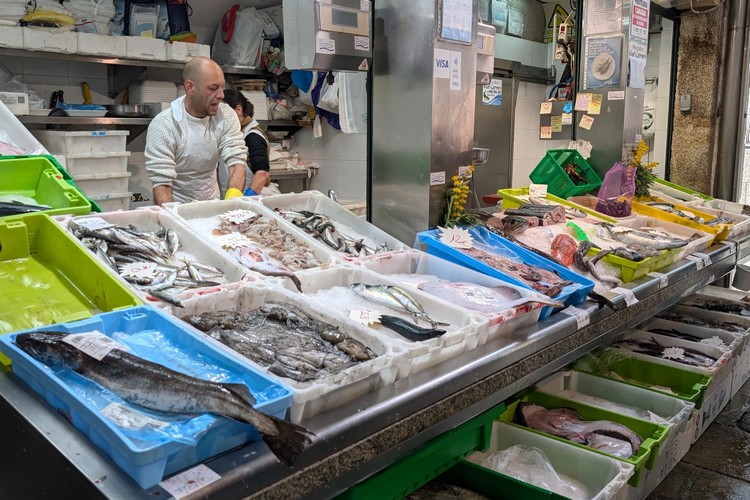
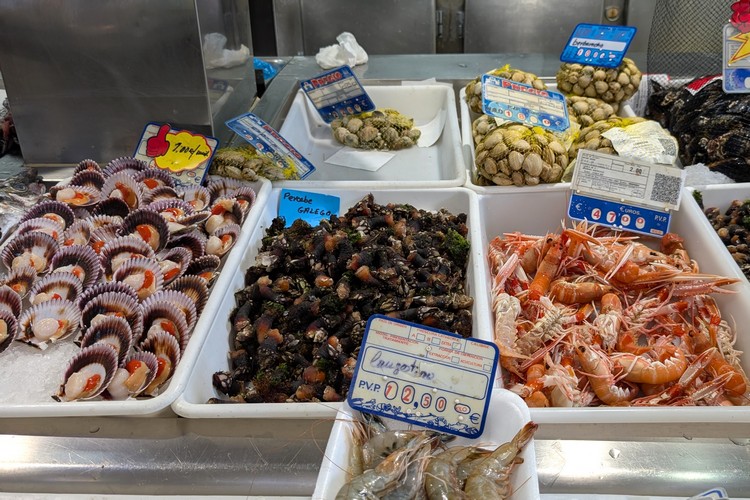
I’m told that you can purchase fresh seafood from any market stall and take it to a nearby eatery within the market to have it prepared for you on the spot.
I did not do this. However, I did see people eating freshly prepared percebes (goose barnacle) that was purchased directly from a seafood merchant.
Convento de Santa María de Belvís
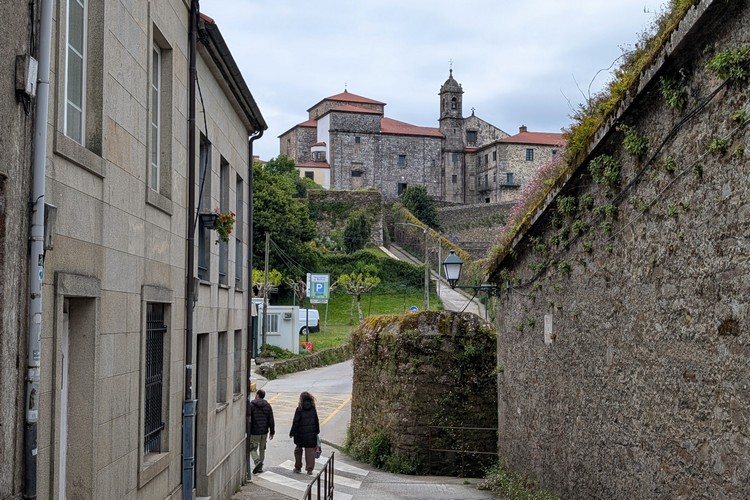
After visiting the market, walk to the nearby Convento de Santa María de Belvís (photo above). It’s only a few blocks from the market.
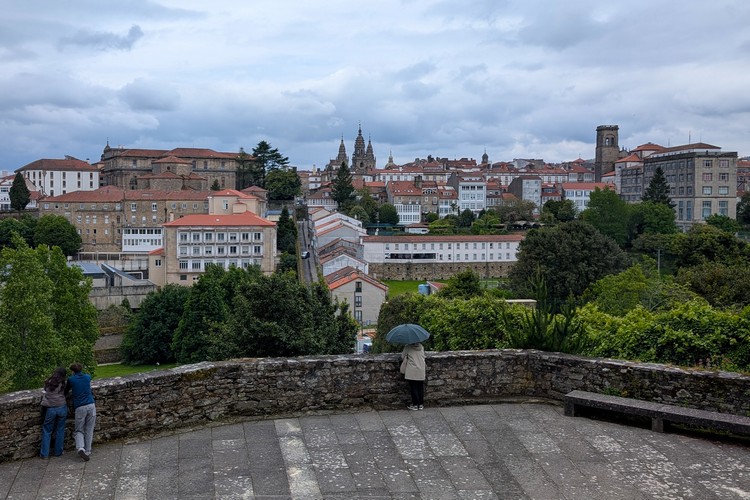
There’s a lookout point here (photo below) with a different panoramic view of the city. Even if you’re not interested in visiting the monastery, it’s worth visiting for these views.
Albergue Seminario Menor is located here, if you’re looking for cheap accommodations in Santiago de Composela. This is a one of the most popular albergues in Santiago de Compostela because of it’s large capacity and walkable proximity to the old town centre.
Wander the streets of the Old Town
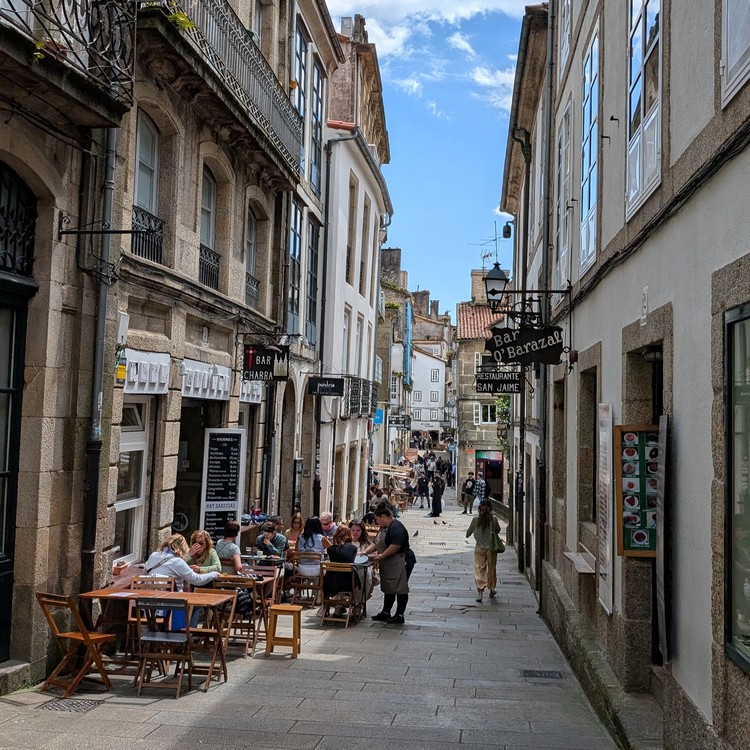
Getting lost in the narrow, granite-paved streets of this UNESCO World Heritage Site is arguably the best thing to do in Santiago de Compostela.
During my visit, I must have walked at least 10 kilometers each day without a plan. Let your curiosity guide you. Pop into the gift shops and art galleries, grab a table outside and order your favourite beverage, listen to the church bells ring each hour.
I know it’s cliche to say, but Santiago de Compostela is a truly unique city.
Related: Thoughts after walking the Camino de Santiago
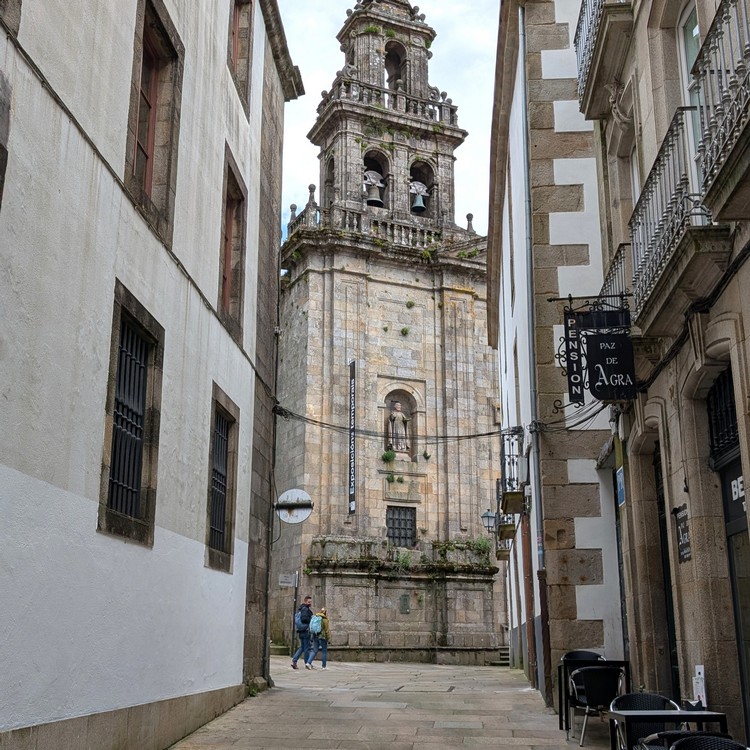
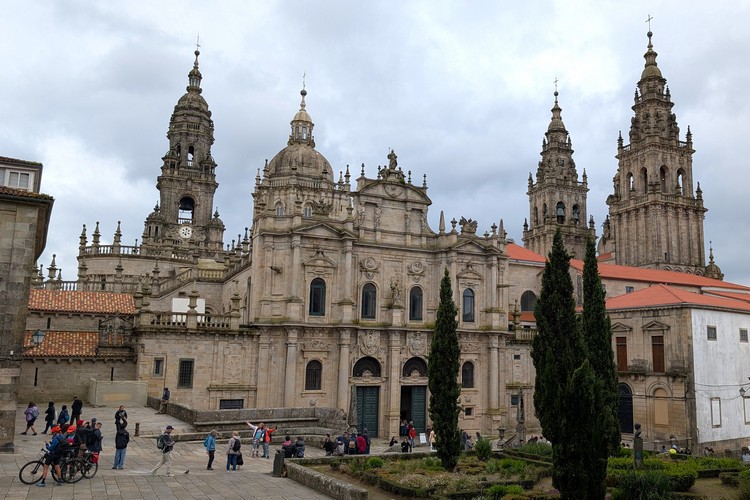
Admire the stunning architecture
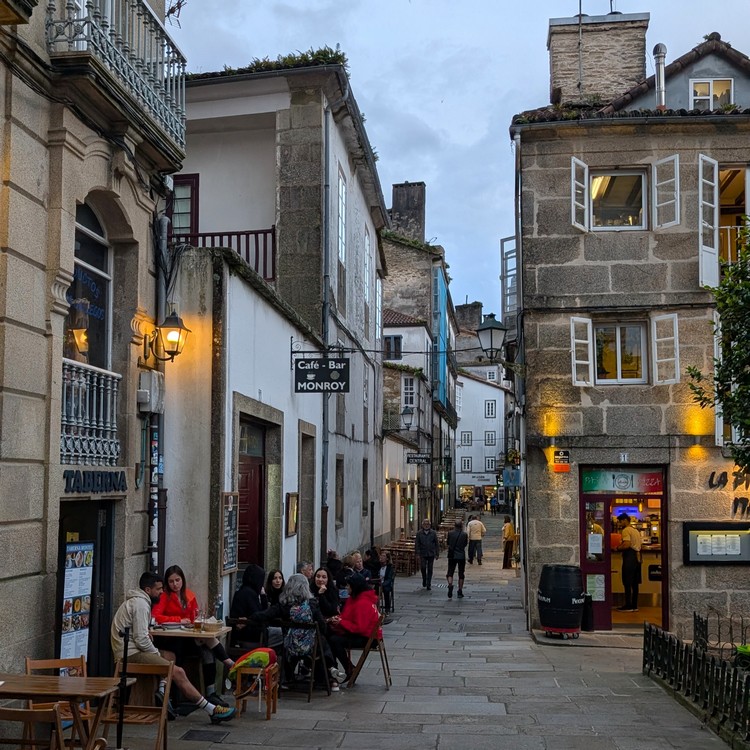
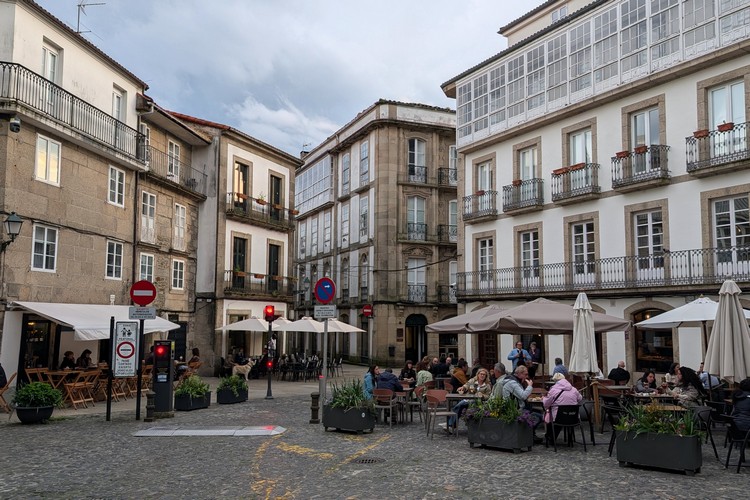
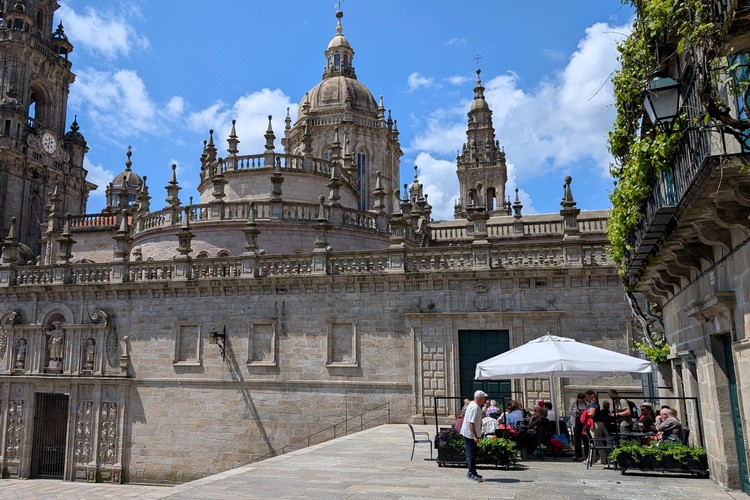
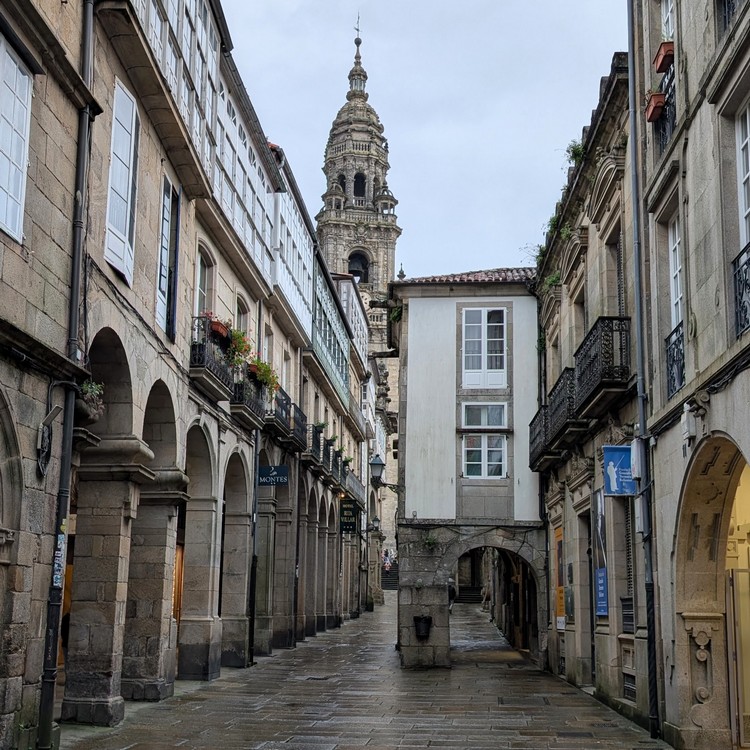
The architecture in Santiago de Compostela is stunning. Every corner reveals another masterpiece.
I took hundreds of photos of buildings, churches, hotels and fountains. Below are a few photos from my time exploring the streets of Santiago de Compostela.
The city’s architectural backbone is Romanesque, dating back to the 11th and 12th centuries. However, during the 17th and 18th centuries, the city experienced the Baroque Revolution.
See more photos of Santiago de Compostela on our Instagram page.
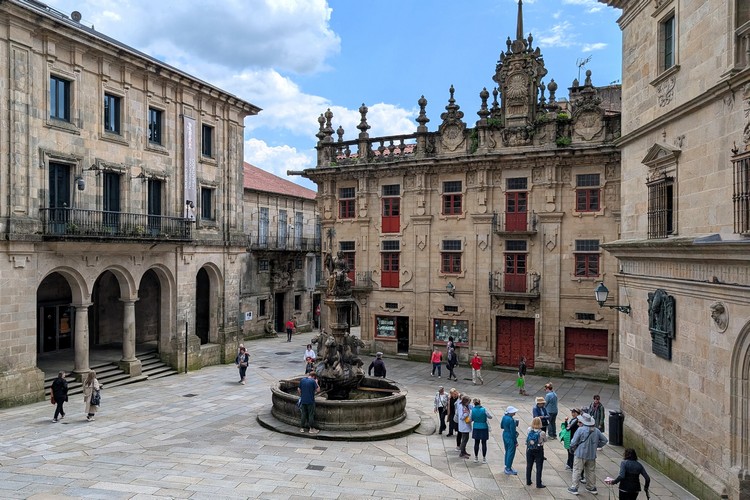
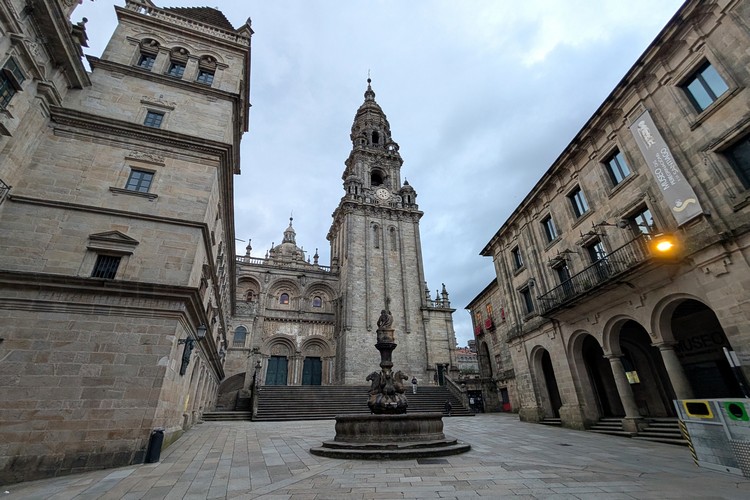
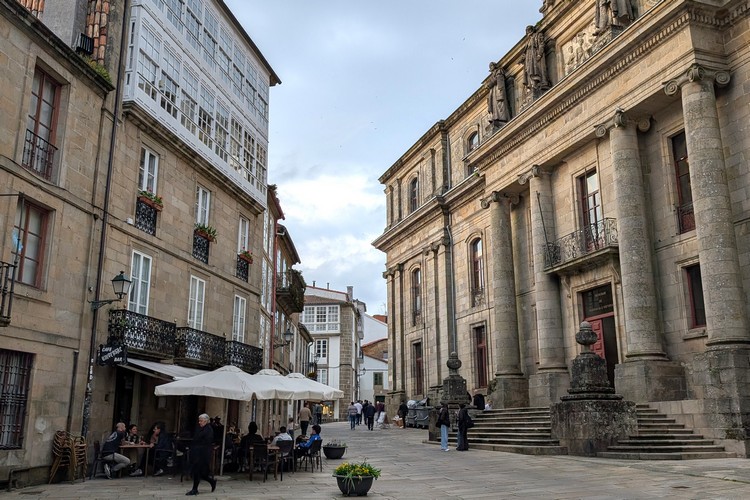
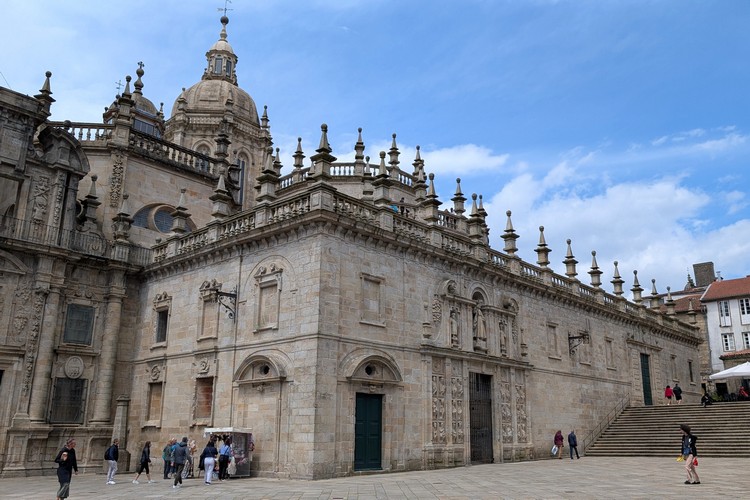
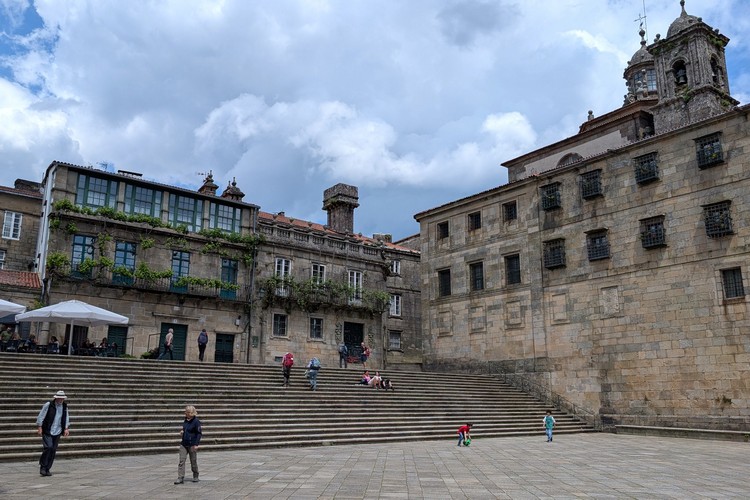
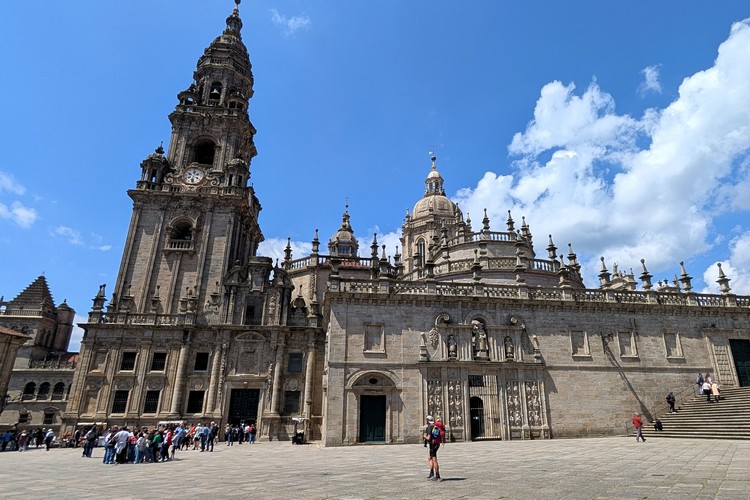
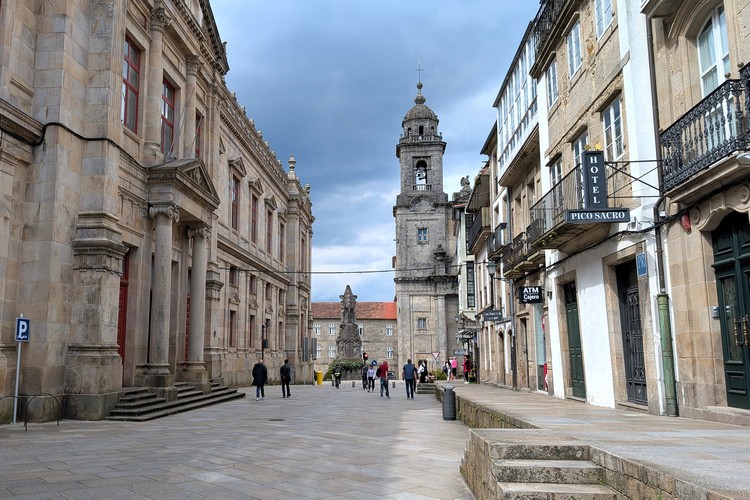
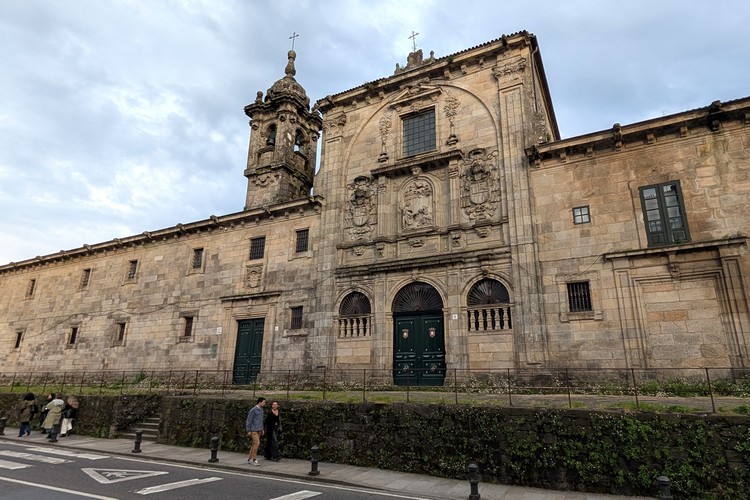
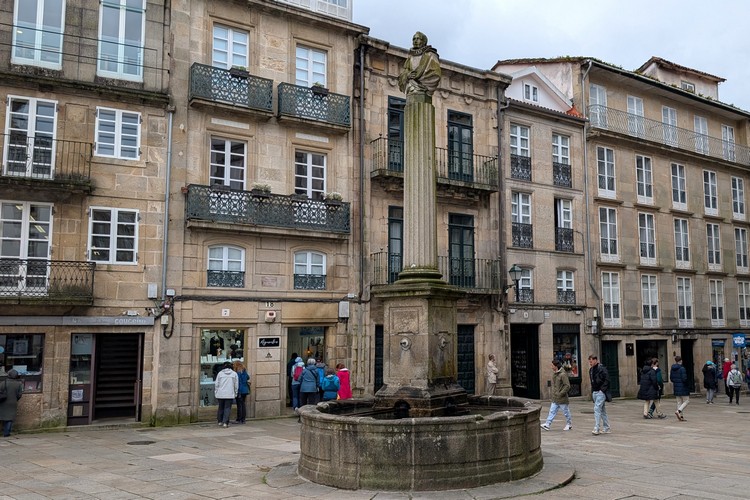
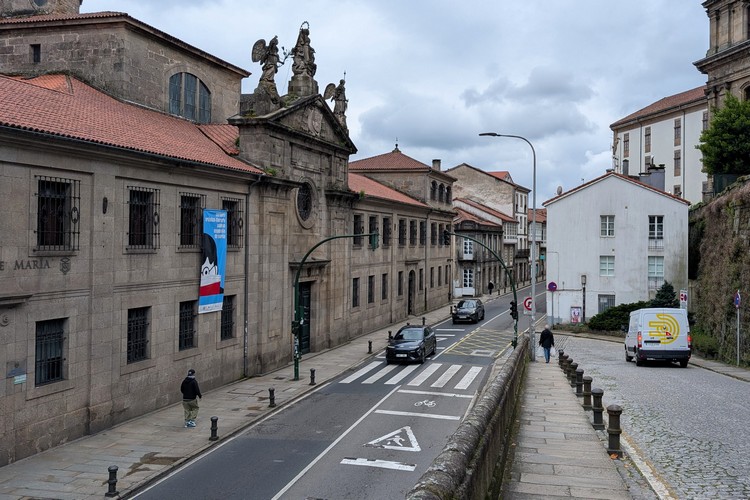
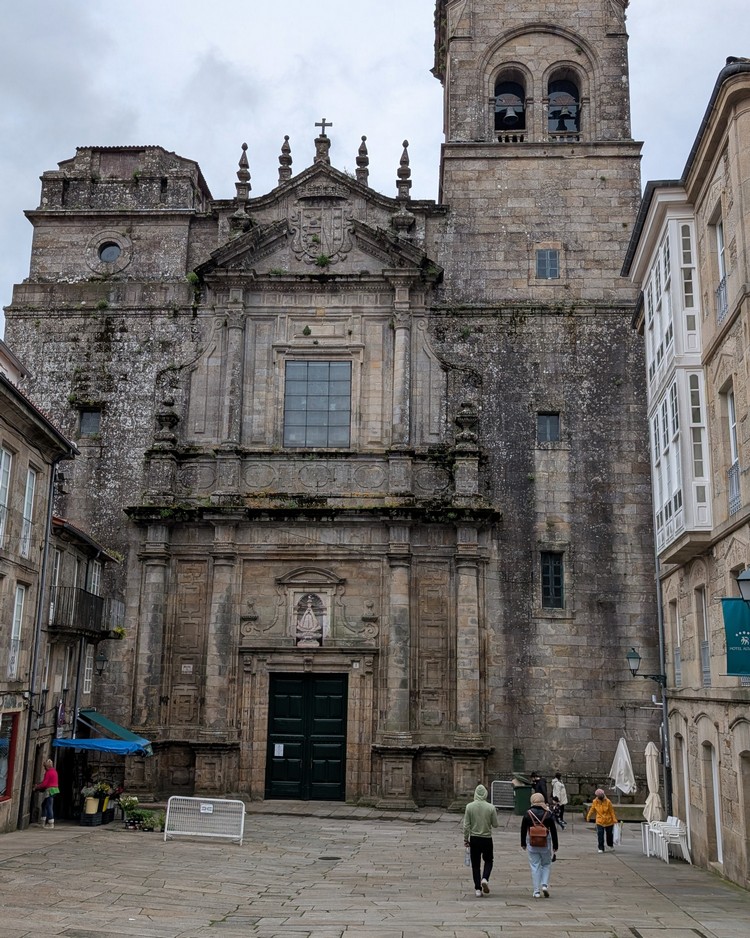
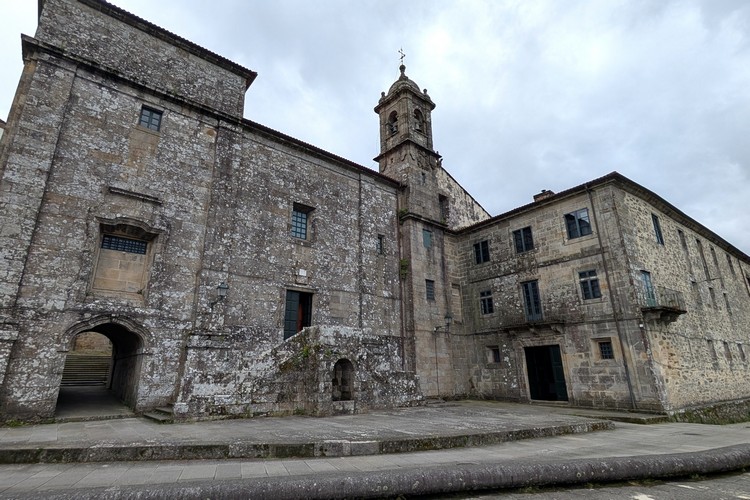
In any other city, this old stone church would be the star attraction. In Santiago de Compostela, it doesn’t even crack the Top 5.
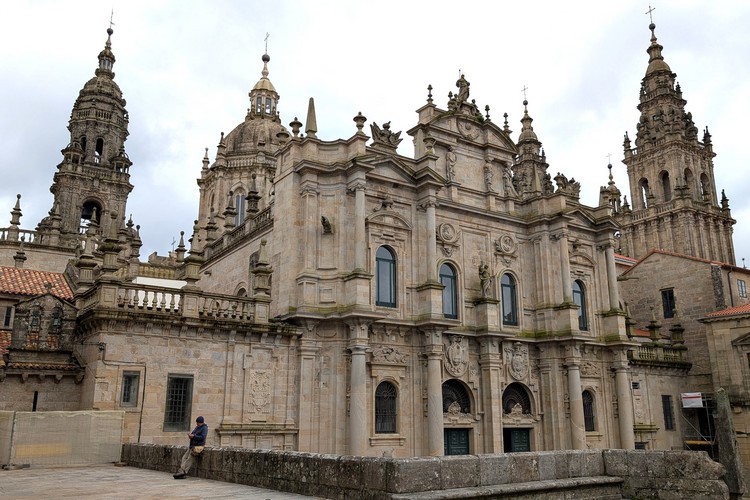
Above – backside of Cathedral of Santiago de Compostela. It’s absolutely stunning!
Where to stay in Santiago de Compostela?
The good news is that you have plenty of options for accommodations in Santiago de Compostela. It’s a very popular travel destination that welcomes over 500,000 pilgrims each year.
I stayed at two different hotels during my two nights in the city.
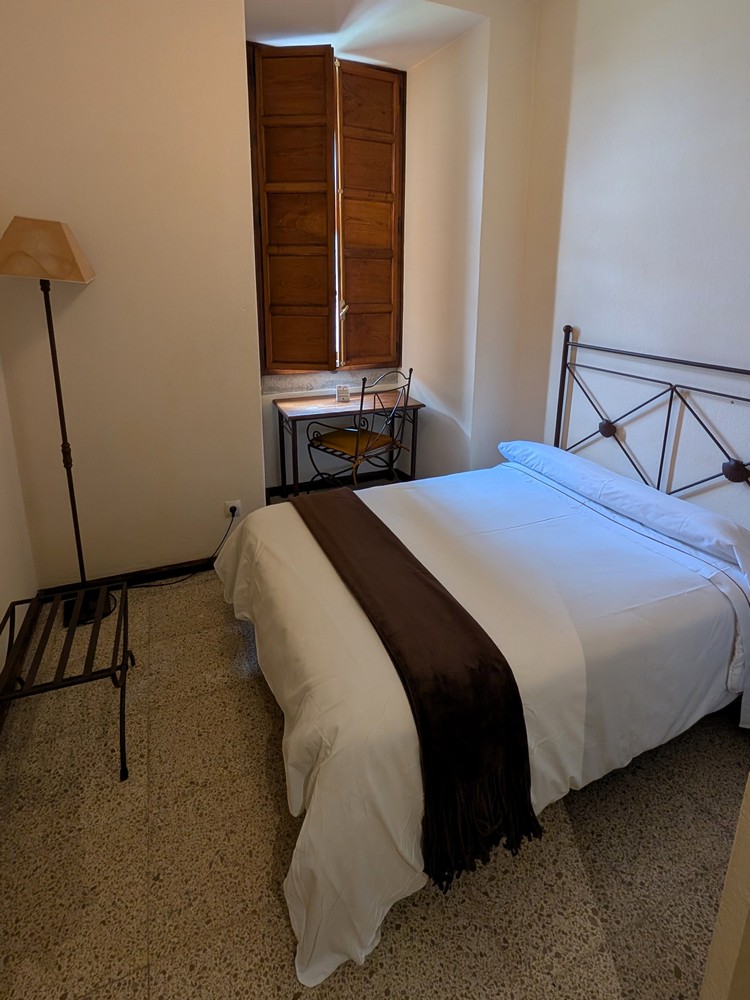
On my first night in Santiago I stayed at Hospedaría San Martiño Pinario.
The photo above is my room. Here’s a short reel from my stay at this hotel.
I was pleasantly surprised by this hotel. It’s part of the old monastery and the rooms have been upgraded. It’s ranked as a 1 star hotel, but I don’t agree with that. I’d say it’s closer to a 3 star.
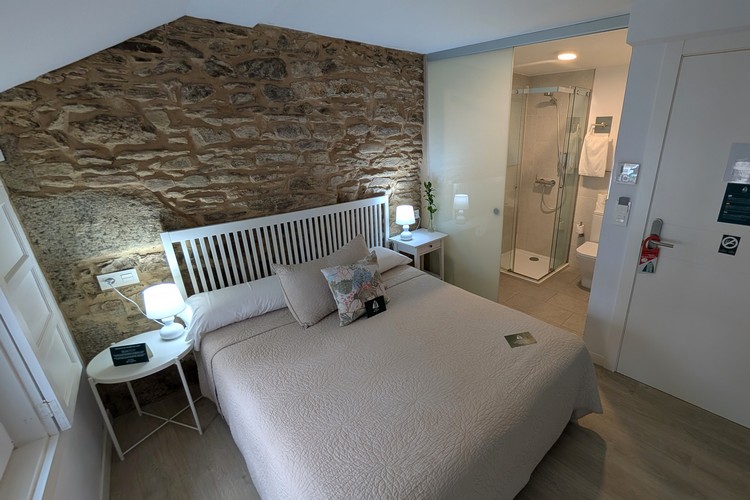
The next night, I stayed at Pensión Rúa Nova.
I enjoyed my stay here. See photo below. This hotel does not have a common area or restaurant, just a few rooms on 3 floors. It’s clean, quiet, comfortable and the location is perfect.
Pensión Rúa Nova is affiliated with Hotel Rua Villar, which is located one block away. That hotel has a restaurant, lobby and front desk. You actually check-in at Hotel Rua Villar to get your room key for Pension Rua Nova.
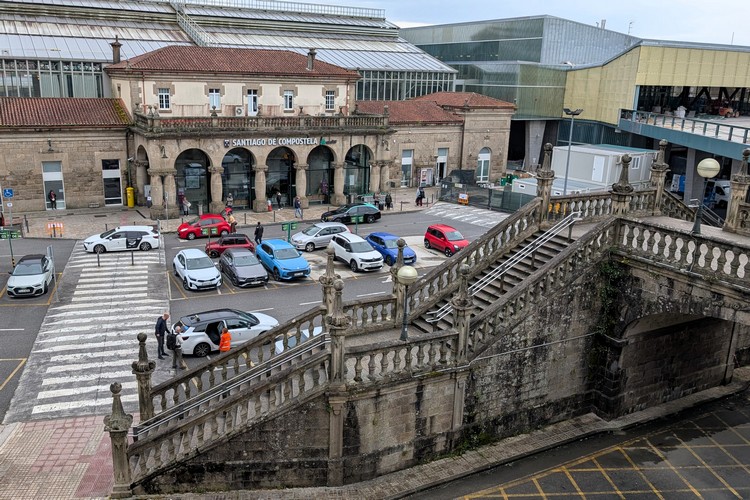
Train Station in Santiago de Compostela
After spending a couple of days in Santiago de Compostela it was time to make my way back to Madrid.
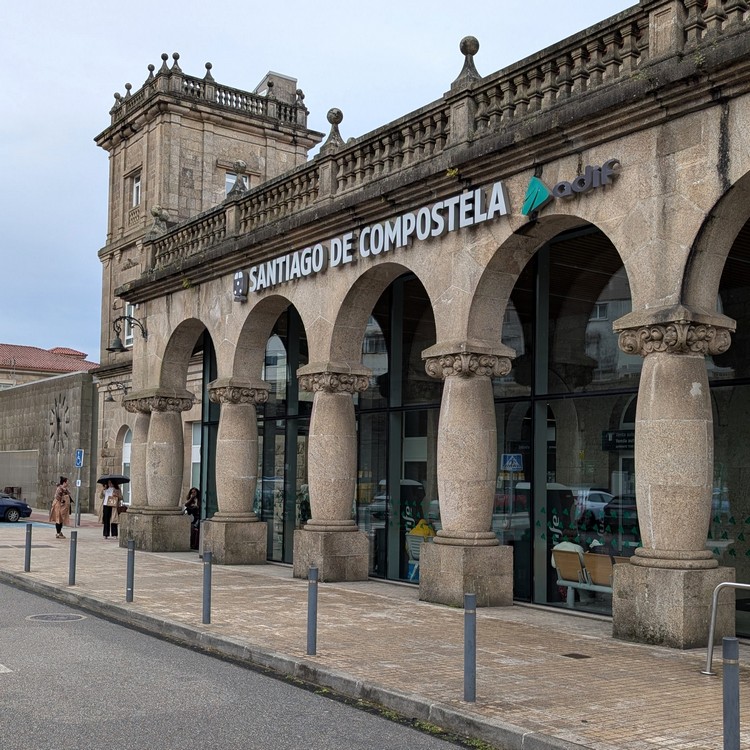
I took the high-speed train from Santiago de Compostela to Madrid-Chamartín. It takes 3 hours.
I booked an early morning taxi from Pensión Rúa Nova tot he train station (taxis are allowed inside the Old Town centre). However, you can easily walk to the train station from the city centre. It’s about a 20-30 minute walk, depending on where you are staying.
Purchase your train ticket in advance!
Don’t make the mistake of casually showing up to the train station and thinking a seat will be available for the next train. It’s a very popular train route, especially in peak season.
The bus station is physically connected to the train station via a pedestrian walkway. If you plan to travel from Santiago de Compostela to Porto, the bus is your best option.
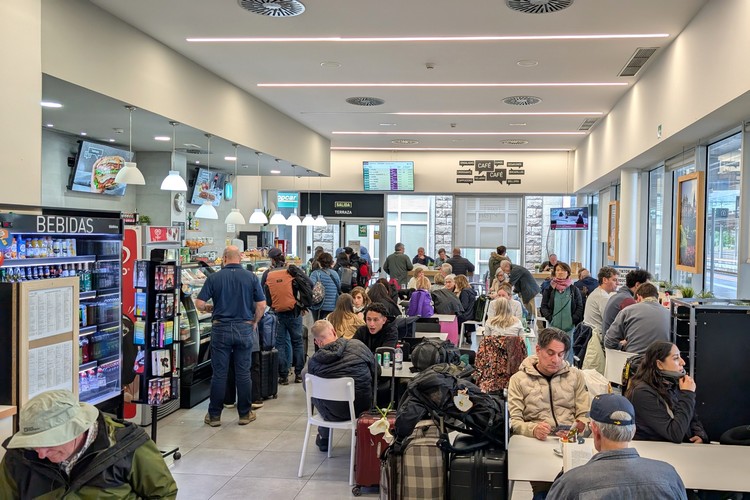
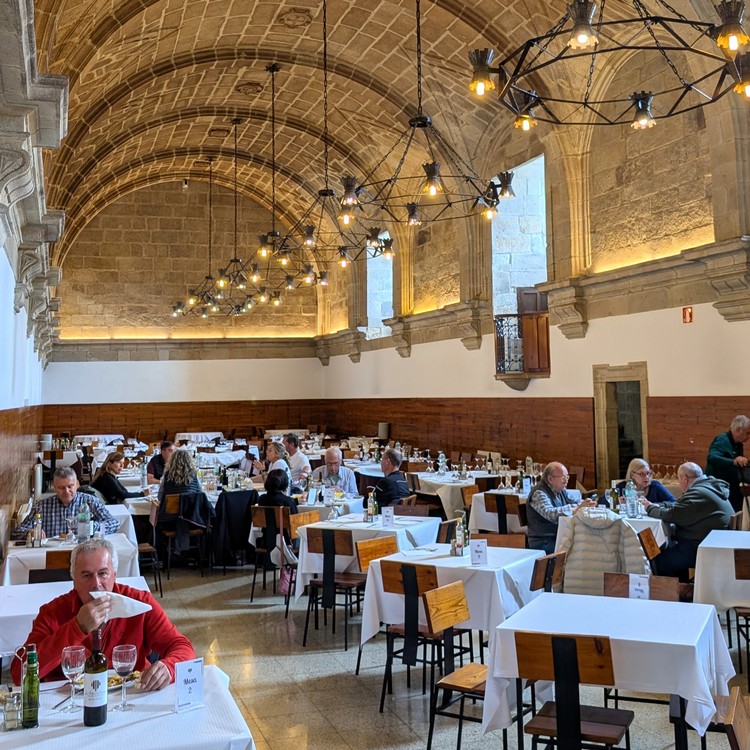
This is the only restaurant/cafeteria in the Santiago de Compostela train station.
It gets very busy before a popular train is about to depart.
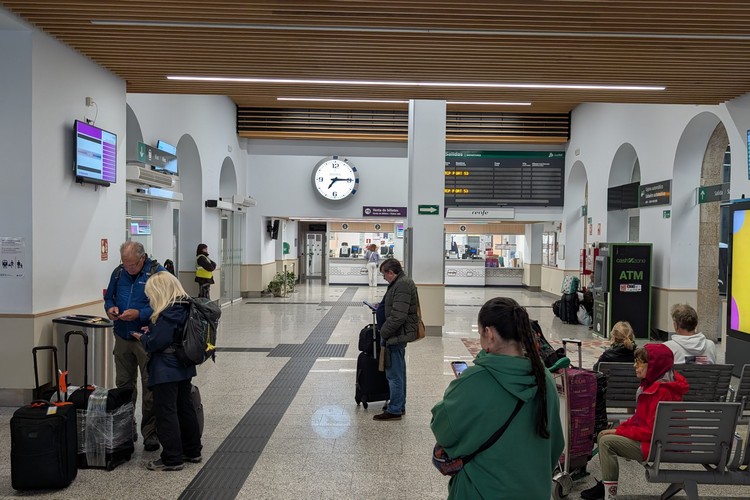
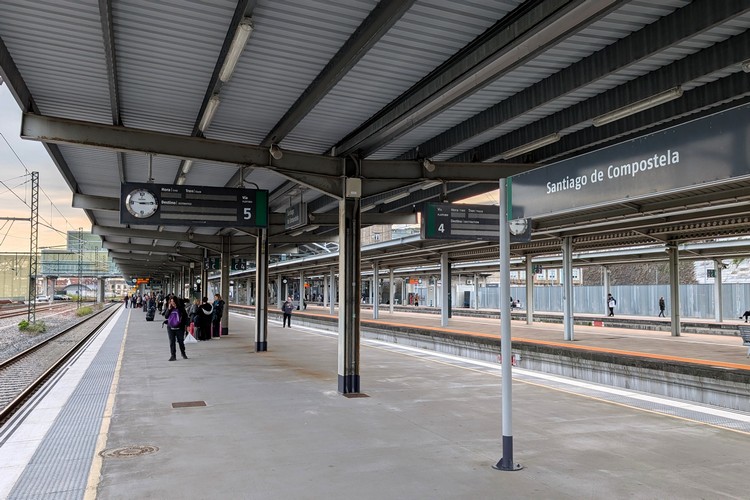
I hope you found this post about ‘what to do in Santiago de Compostela after the Camino’ helpful.
Obviously there are a lot more things to do in Santiago de Compostela, but this list should fill up your first few days in the city. Please add your tips and recommendations in the comments section below.
More blog posts about the Camino de Santiago
- Walking the Camino de Santiago: A Beginner’s Guide and FAQ
- Thoughts after walking the Camino de Santiago
- Starting the Camino Frances from Leon
Watch this short recap from my Camino on Instagram.
Are you planning to walk the Camino de Santiago?
Leave us a comment below if you have questions. Our readers thank you!


Leave a Reply